
A Nation Once Again 1 – A Guest Post by Brian Hopkins
Sport has played a significant role in the formation and subsequent maintenance of national identity. Ireland, in the late nineteenth and twentieth centuries, attests to this nexus. Indigenous games such as hurling were formative influences in this respect, something that Mussolini, for example, failed to achieve in Italy despite his sport-infused ideology.
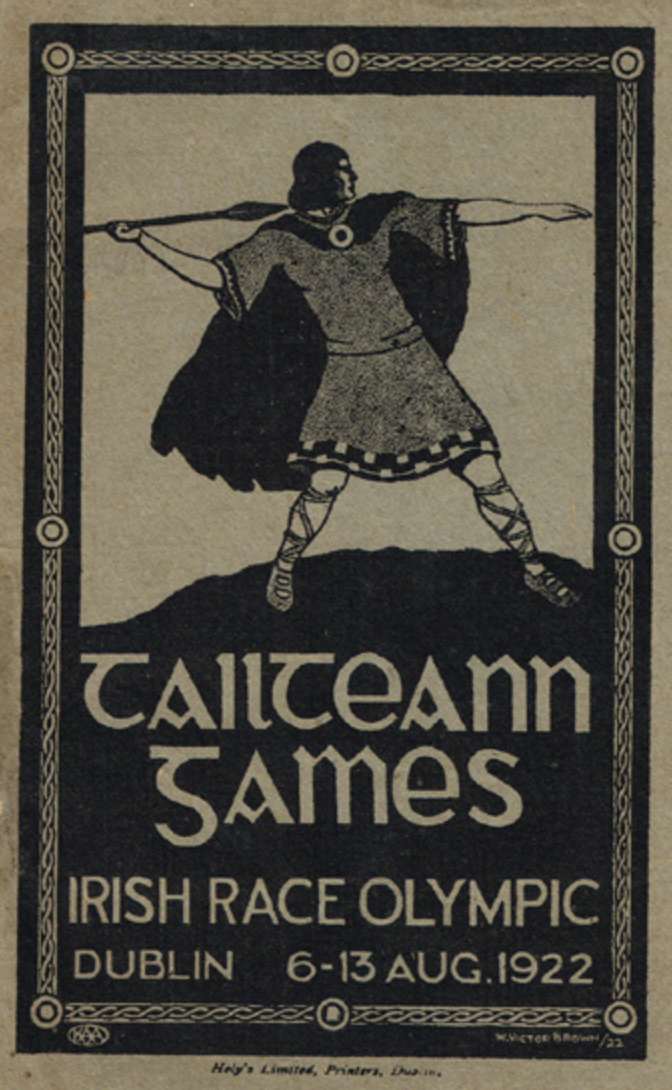
Participation in the 1924 summer Olympics and the establishment of the first Tailteann games (TG) in the same year, using its ancient version as a palimpsest for the modern reincarnation, proclaimed Ireland on the international stage in the process of freeing itself from British hegemony.2
This article traces the tortuous and challenging path taken after the devastating Civil War to achieve what has what has been called the ‘Irish Olympics’ as well as the links among the two sporting events. Along the way, some of the colourful personalities who used sport to forge an Irish national identity are brought into relief.
It is all-but axiomatic to state that sport is an important ingredient in the manufacture of national identity. For the purposes of this article, and somewhat less axiomatic, is to contend that national identity refers to how citizens of a country identify with their own country’s historical and cultural traditions, among other things, that creates a sense of collective belonging or shared habitus (in Bourdieu’s sense of the term).3
Sport not only benefits the acquisition of a national identity, but also in the longer term the process of nation-building.4
Many states and governments have exploited sport, broadly defined, to these ends. For example, sport displays or spectacles (e.g., mass gymnastics) were a hallmark of rising authoritarian regimes during the 1930s in Europe culminating in the Berlin Olympics of 1936. Also, particular sports such as international soccer contributed to the formation of a national identity, something that Mussolini was acutely aware of.
Mussolini, O’Duffy and Ireland
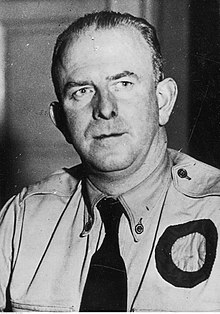
Eoin O’Duffy, a great admirer of Mussolini, held a series of appointments in Ireland: member of: Chief of Staff of the IRA, member of GAA Council, Commissioner of the Garda Síochána (Irish Police Force) and General Officer Commanding of the Irish Army. He was also member of the Irish Olympic Council and played a significant role in the organisation of the Tailteann Games and latterly founded the Irish fascist movement, the Blueshirts whose attire he is wearing.
Source: Wikipedia.
In 1919, Benito Mussolini (1883-1945) founded the Fascist Party in Milan.5 Four years later, a Fascist state was officially proclaimed with Mussolini as its leader (Il Duce). Mussolini, the master mythmaker, drew on history, imagined and real, and constructed a narrative that melded twentieth century Italy with the grandeur and military heritage of Ancient Rome.6 He was quick to realise that sports clubs offered a tailormade rostrum for promulgating his mythogenesis. Here is where the masculinity of sport took ideological centre stage in Italy.
In Ireland, Mussolini the atheist was highly regarded as a ‘Catholic’ statesman and a man of providence, especially by the fervently anti-communist and anti-liberal upper echelons of the senior clergy. In 1925, W.T. Cosgrave (1880-1965), the new leader of Cumann na dGaedheal (Society of Gaels), headed a pilgrimage accompanied by nine bishops and 300 other people to the Italian town of Bobbio to commemorate the thirteenth centenary of St Columbanus.7 They were feted by the Fascist Party and travelled south in a luxurious carriage manned by the Blackshirts to pay homage to Mussolini. Three years later, Eoin O’Duffy (1890-1944), the then Police Commissioner, led 250 Irish policemen to visit the Tomb of Unknown Soldier in Rome.16 While the entourage was accorded full honours, the meeting with Mussolini proved be a humiliation for O’Duffy. The Commissioner goose-stepped his way to meet Il Duce who treated him contemptuously. The embarrassed O’Duffy referred his host as ‘a blithering idiot’.8
Despite the public rebuke, O’Duffy continued to admire the Fascist leader’s model government for its promotion of masculinity through robust physical training. For O’Duffy, it was a means of counteracting perceived effeminacy and benefitting the well-being of adolescent males, an ideology shared by Robert Baden-Powell (1857-1941) founder and leader of the Boy Scouts in Britain. O’Duffy ensured this ideology was a central plank in the ethos of the Gaelic Athletic Association (GAA) in which he served in a variety of positions such as the Secretary of the Monaghan County Board, a position he was elevated to in 1912.9 O’Duffy had undoubtedly administrative and other skills beneficial to the GAA and his own political career. As for Mussolini’s sport-driven ideology, it had an effect on O’Duffy, and via him it was to have a profound influence on the preparation and organization of the TG. As for O’ Duffy, he became known as the Irish Mussolini.10
Enter the GAA
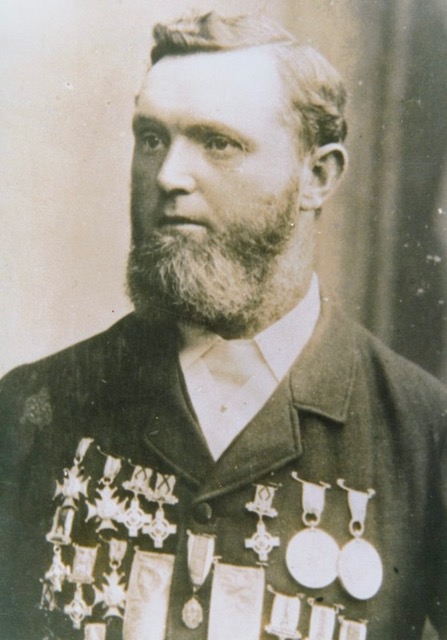
Maurice Davin, the other co-founder of the GAA, a top-class all-round athlete who led a contingent of Irish athletes to competitions in North America as a means of raising money and moral support for the Tailteann games. Source: Wikipedia

Michael Cusack co-founder of the GAA who turned against English sports such as cricket and rugby to promote Gaelic games as a means of challenging the British rule in Ireland. Source: Wikipedia
On 1 November 1884, the billiard room in Lizzie Hayes’s Commercial Hotel in Thurles, County Tipperary: the location for the birth the GAA catered for a small meeting of about ten men.11
The prime mover of the meeting was Michael Cusack (1847-1906), a schoolteacher in Dublin and a dedicated Fenian who had excelled at high jump and weight-throwing events (becoming Irish 16Ib shot-put champion in 1881) as well as cricket and rugby.12 Prior to 1884, he abruptly turned against English games in keeping with the Gaelic revival that was undergoing resurgence in the late nineteenth and early twentieth centuries. The main aim of the GAA was to disencumber Ireland from the increasingly dominant British culture so that Irish men should play, rather than just watch, indigenous sports and such sports should avoid the corrupting hand of professionalisation (women would have their camogie association in 1904, transferring to the GAA in 1999).
Maurice Davin (1842-1927) from Tipperary, a supreme athlete who excelled in a plethora of sports, with world records for hurdling, jumping and weight throwing, offered to help Cusack. 13 Together they became co-founders of the GAA. Davin was elected president and Cusack secretary. Perhaps due to his argumentative nature, Cusack did not become leader of the organization. 14 From the start, the GAA was not political in nature, but as it developed it became increasingly difficult to maintain neutrality.
Opposites Attract
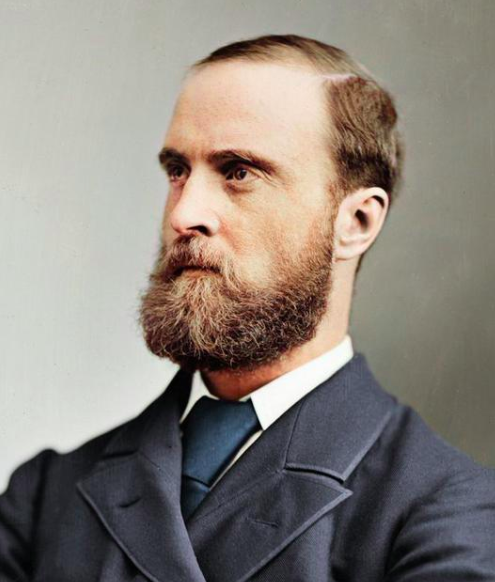
Charles Stewart Parnell.
Davin was not a Fenian and unlike Cusack, who was garrulous, he was genial and methodological and so it was that he took on the arduous task of codifying Irish sports that not only included Gaelic football and hurling, but also handball and rounders, a task completed by 1885. Davin’s focus, however, was to establish Irish athletics as a separate entity from its British counterpart.
The selection of patrons who were stalwarts of Irish nationalism would help to secure the GAA as a major force in the country. To this end, Michael Davitt (1846-1906), Archbishop Thomas Croke (1824-1902) and Charles Stewart Parnell (1846-1891) were approached and accepted the positions.15 Once in place, there was a surge in support of the GAA and Gaelic sports for the next couple of years.
In-Fighting and Decline: On the Cusp of Implosion
The meteoric rise to sporting dominance of the association during the 1880s was facing disaster by the early 1890s. Parnell, the ‘uncrowned king of Ireland’, would play a crucial role in bringing the GAA to the point of collapse through an event called the Parnell split.16 In 1889, Parnell began an affair with his married mistress Katharine O’Shea. His affair became a public scandal and outraged the Catholic Church, the outcome of which was the loss of his position in the GAA. Croke resigned his patronage and after time the affair faded into political obscurity.
On another front, a gathering storm was building with a struggle for control of the GAA between the Irish Republican Brotherhood (IRB) opposed by the ruling Irish Parliamentary Party led by Parnell who wanted a peaceful route to achieve Home Rule.17 Intervention by Croke brought the two sides together, but with limited success. Any chance of a rescue operation was faced with economic recession and mass migration as well as a potato blight. Allied with such problems, a number of clubs were closing, especially in the west and the south-east of the country (e.g., in Mayo branches had declined from thirty to three), confronted with a growing influx of British games such as rugby and cricket. All told, Parnell’s love affair and the internal strife all but derailed a pathway to the TG. Clearly some sort of saviour was needed. Step forward Richard Blake (1868-1937).18
Enter Blake
With a Panglossian view of life combined with a self-assured determined demeanour to solving seemingly intractable issues, Blake was probably the ideal person to halt the GAA’s downward spiral. By 1894, he was a well-known and respected in GAA circles due to articles he had written about shortcomings in its organization.
In 1895, elected secretary of the association, he moved to undermine the influence of the IRB so as to remake the association non-political and non-sectarian, a move supported by the GAA’s Central Council. He next tackled the ongoing problem of codifying and re-structuring the rules of both football and hurling. His efforts resulted in more open and faster high-scoring games.
During his occupancy, the number of hurling and football clubs affiliated with the GAA more than doubled (114 to 357) while income almost trebled. He was not finished: he ensured that the GAA Ban (Rule 27) on foreign games was removed and promoted the status of athletics (the latter persisting under the auspices of the GAA until 1922).19 Perhaps his pinnacle of achievement was raising money to purchase the Jones Road sports field in 1913 for the princely sum of £3,500 (worth over £500,000 today).20 After assuming ownership, the GAA renamed it Croke Park in honour of patron Croke.
In 1898, Blake was dismissed from the GAA on dubious legal grounds of mismanagement. More plausible, his self-styled agnosticism and sometimes strident personality confronted by bigotry (yet another case of religion interfering with socio-politics in Ireland) that led to his dismissal. Nevertheless, Croke stood by him, and so the two men became responsible for the establishment of a national stadium for Gaelic sports. It was to become the main locus of the TG games in 1924, 1928 and 1932.21
Now, a return to two outstanding servants of the GAA, both Catholics, who were pre-occupied with bringing the TG back to life.
The Dynamic Duo: Davin and Davitt
Davitt and Davin were front and centre in promoting Gaelic culture through the medium of Irish sports while for its part the Gaelic League sought to rekindle traditional expressions of Irish life via literature and theatre, which would play role in the Olympics and TG.22 In both cases, the aim was to ensure an Irish cultural identity distinct from that of Britain (a recurring theme in the history of the GAA). To achieve this, Davitt ever the visionary, delved deep into Irish sporting history.
Davitt has a Nationalist Vision
Davitt proposed reviving the ancient TG going back some 4,000 years BCE as a means of anchoring a national identity in a unique and coruscating historical past. This County Meath-based festival was held in honour of the mythological Queen Tailte and catered for a variety of sports, chariot racing being the most popular.23 Its history was a mixture of legend and some facts supported by archaeological evidence.24
Davitt was supported by Davin and Sinn Fein led by Eamon de Valera (1882-1975) in 1922, but the latter subsequently vacillated in enthusiasm for the games.34 Having gained support from the new government, and the cultural and nationalist movement, the duo sought support internationally. The GAA gave an assurance that it would host the games in Dublin in 1889 on condition that £5,000 could be raised. The duo’s attention inevitably turned to the USA and Canada. What materialised has been referred to as the ‘American invasion tour of 1888’.25
The Irish are Coming
With encouragement from Cusack, the tour was led by Maurice Davin and his brother Pat Davin, also an excellent athlete. Their mission was to garner support (financial and ideological) from the government and Irish society in general, but also internationally for the modern renaissance of the TG. The itinerary featured sporting competitions at various Irish-American (and Canadian) epicentres in the north east (viz., hurling, and track and field athletics). On 7 April, fifty athletes set sail from Liverpool on board the SS Cephalonia.
The tour was declared a financial disaster with about half of the Irish participants preferring to stay in the US. A combination of a dispute between American sporting organizations and heavy snow in Canada contributed in part to the failure. An outraged Cusack accused Davitt of “traitorously encouraging his pets to emigrate”.26 Davitt was persuaded by the GAA to loan it £450 (about £75,000 in today’s money) so the remaining athletes could sail back on the SS Rome from New York on 1 October. 27, 28
While the tour did not fulfil its aim as a fundraising mission, it raised awareness of the TG in North America and more importantly among senior figures in the nationalist movement. As for Davitt, he did not escape disaster. His declaration for bankruptcy showed that the GAA had still owed him £450. Moreover, it disowned the tour and its associated debt.29
Another Dynamic Duo: The Two JJs
Following the Anglo-Irish treaty in 1921, the Irish population, war-weary after a decade of strife, was ready for change.30 The TG offered the possibility of achieving it. Two GAA luminaries had the necessary qualities to bring about a modern version of the games imbued with nationalistic fervour: John James Keane (1871-1956) and James Joseph Walsh (1880-1948).31
Keane: The Networker
An impressive Gaelic footballer as well as winner of the Irish 120 yards hurdles, he was also an excellent sports administrator. Keane had served as chairman of the Athletic Council of the GAA until he stepped down to form the National Athletic and Cycling Association that led to the GAA surrendering control of athletics to focus on the Gaelic games.
These positions, together with his extensive network of contacts, including Pierre de Courbertin (founder of the modern Olympics), equipped Keane to claim a seat on the International Olympic Committee, thus paving the way for the newly formed Irish Free State to compete in the 1924 Olympics despite opposition from the British Olympic Committee.
While Keane, all but single-handed, secured the achievement, he was also actively engaged in the three TGs becoming chef de mission for the 1932 Olympics. In making the TG a reality, he was partnered by an equally brilliant organizer, but one that was counterpoint to the diplomatic Keane and who was not too dissimilar to O’Duffy in personality.
Walsh: The Redoubtable Bruiser
In 1902, JJ Walsh had organised a post-office sports meeting in the Mardyke, a large open area in Cork city. He took part as a jockey in a dromedary race.32 It was perhaps his only claim to sporting prowess. By 1922, Walsh had become Postmaster General in which capacity he brutally quashed a strike of his former post-office workers.33 His petulant ‘no holds barred’ personality proved to be a boon in driving through the fielding of the TG in Dublin and environs.
Keane and Walsh in their own ways were workaholics, but seemingly with no dynamic coupling between them. Keane can be said to have promoted Ireland internationally while, ever the GAA man, Walsh did so nationally although the distinction does not do justice to their invaluable work in bringing the games to fruition. The two would not have moved in the same circles after 1921 given Walsh’s right-wing political views.34 Working in parallel, rather than collaboratively, their combined agency was crucial to Ireland participating in the Olympic Games and to the realisation of the home-grown TG.
From Discord to Concord
Already in 1923, Cosgrave’s government was faced with air of discord pervading the country. There was a rancorous labour dispute caused by cuts to the wages of Dublin municipal workers resulting in uncollected garbage and loss of electrical power, as well as a strike by members of the Fire Brigade, in the city that was to host the games.35 Another, more serious, challenge was about to emerge.
Army Mutiny
The strike served a prelude to a greater threat to the neophyte state that spilled over into 1924: a brewing mutiny that seemed almost ineluctable.36 With a strength of 50,000 soldiers, 12,000 of whom were eventually imprisoned (including de Valera), the government feared a coup and set in motion the process of demobilization directed by the fanatical Free Stater O’Duffy. Walsh contacted Cosgrave emphasising the need to release the remaining anti-Treaty prisoners. He was concerned that the Republicans could disrupt his treasured games hence deterring people attending from America and Britain. Despite Walsh’s plea, the government responded with a combination of further arrests, sackings and conciliatory negotiations conducted by the tough-minded Richard Mulcahy (1886-1971), Minister of Defence.37 The end of the mutiny, more or less, marked the end of the Civil War.
Sports-wise, in the internment camps for the anti-Treatyites during the munity and overarching Civil War, soccer became a favourite pastime for the separatist internees. According to Todd Andrews (1901-1985), a staunch veteran Republican soldier, it was an act of defiance due to remaining British officers being employed as Irish Free State jailers.38 Odd then that the 1905 Ban was defied in favour of ‘foreign’ sports such as soccer. However, given that the Civil War made it difficult, if not nigh impossible, to mount Gaelic games as it would require pauses in hostilities, so it would not be surprising that the indigenous sports diminished in popularity.
The Two Pessimists
Mulcahy expressed in writing that he doubted whether the TG would be successful nor would it bring any credence to the country. As for Kevin O’Higgins (1892-1927), Minister for Home Affairs, he was even more explicit in his pessimism.39 He forecast problems with the provision of accommodation and catering. He expected at least 100,000 tourists from North America who had refrained from visiting Ireland because of the decennium of conflict. Also, thousands more would come from Britain, including those attending the 1924 Dublin Horse Show. The lack of facilities to deal with such a number of arrivals could give rise to looting and rioting. The ever-forceful Walsh had no truck with such pessimism although he agreed with the estimate of 100,000 US visitors. He wrote to the cabinet that such issues could be resolved with little difficulty if ships in Dublin harbour, rooms in private homes and Trinity College housed some of the visitors.40 After all, such an influx of visitors could only benefit the long-suffering tourist industry. There was still, however, an unresolved ideational issue that went to the heart of the meaning and essence of sport at the time.
Clash of Ideology
On the one side there was Celticism promoted by literati such as the poet W.B. Yeats (1865-1939) and the dramatist Lady Augusta Gregory (1852-1932) that leaned on folklore mystical warriors such as Cú Chulainn and icons of femininity such as Diedre of the Seven Sorrows 40 (a movement referred to as ‘literary antiquarianism’ 41). On the other, there was Gaelic symbolism propagated by Daniel Corkery (1883-1961), politician and GAA supporter, Croke and O’Duffy that was expressed through sport, physical fitness and strength 52 (paraphrased as ‘muscular Catholicism’ 43).
Walsh, now director of the organising committee, a GAA man to his core, backed the Gaels. The games would serve to portray the country as a young, healthy, vibrant and a male-dominated nation (Mussolini redux). For the time being, amity replaced enmity as the games approached the deadline. But there was still the small matter of Ireland’s participation in the 1924 Paris Olympics (5-27 July).
Stepping into Sporting Nationhood: Paris 1924
Having joined the League of Nations in 1923, it was followed shortly after by another milestone: competing for the first time as a national delegation at the 1924 Olympics in Paris. It would be an opportunity to try-out and test the calibre of home-grown athletes against some of the world’s best. More importantly, it would serve as a declaration of having turned its back on British imperialism through the medium of sport.
The Delegates and the Irish Whales
In total, Ireland managed to send a team of about 50, two of whom were female tennis players (see Table 1 below). Broken down by sport, there were twelve footballers, seven boxers, seven water polo players and eight individuals entered in a variety of art competitions (competitions that continued up to the 1948 London Olympics).
At the opening ceremony, the discus thrower Paddy Bermingham (1886-1959) carried a placard with the name Irelande on it and Jack O’Grady (1891-1934), a weight-for-distance thrower, held aloft the Irish tricolour while the anthem Let Erin Remember echoed around the stadium.44 These two men were a continuation of the legendary Irish Whales.45 This nickname referred to a group of eight Irish men, most of whom settled in New York and worked as policemen there. These immense and powerful men dominated American and Olympic weight throwing events between 1896 and 1920 under the US or Canadian flags.
No (Sporting) Luck of the Irish, but …
Ireland won only two medals in Paris: Jack B. Yeats (1871-1957), younger brother of W.B. Yeats, gained a silver medal for painting and a bronze for poetry was awarded to the storied Oliver St John Gogarty (1878-1957), physician, politician, pilot and top-class cyclist who briefly played soccer for the English club Preston North End.46 His louche lifestyle was captured in the novel Ulysses by James Joyce (1882-1941).
Luck ran out when it came to sporting competitions with no medals won. All the same, there were three Irish athletes who captivated the imagination in Ireland and added to a growing sense of national identity that was distinctively separate from Britain: two boxers and one high jumper.
Robert Hilliard (1904-1937): The Boxing Pastor
At varying times, Robert Hilliard was a Church of Ireland pastor, a Marxist (before becoming a clergyman), and an ardent Republican.47 With little financial assistance, the eight Irish boxers reached Paris, Hilliard being the only one not to be a member of the army. Already an Irish and British champion, he competed as a bantamweight, getting a bye in the first round and then losing on points in the second.
On a return to England, he embroiled himself in journalism and advertising. He continued boxing the bantamweight title for a number of years, then becoming featherweight title in 1931. Hilliard became a Communist and in September 1936 left for Spain to the join the International Brigades to fight for the Spanish republican cause against the forces of General Franco.48 In February 1937, a fascist force of 40,000, crossed the Jarama River. In the battle of Jarama, 7,000 republican soldiers were fatally wounded, including Hilliard.49 His frentic life-style was probably the reason why he did not take part in the 1924 TG. A life-lived ripe for filming.
Paddy Dwyer (1884-1948): aka ‘Rocky’
A good hurdler and soccer player, Rocky started off well as a welterweight defeating a British boxer in the first round as well as winning the second and third encounters. His luck ran out in the semi-final having been forced to retire with a deep gash in the forehead due to his opponent‘s illegal use of the head. Under today’s rules, Dwyer would have been awarded a bronze medal.50
Larry Stanley (1896-1987): ‘King among Men’
One of the first athletes to wear the Irish Olympic vest, Larry Stanley was not only an outstanding high (and long) jumper, but he was also considered to be the greatest Gaelic footballer of his time (hence the accolade).51 He competed in the Paris Olympics in the high jump in one of the most memorable matches of the games. Previously having cleared 1.88m in England, he was considered to be contender for a medal.
In a spirited competition against the great American jumper Harold Osborn (1899-1975), he disappointingly jumped 1.75m against Osborn’s gold medal and games record of 1.98m.52 What is striking is that Osborn, who had limited vision, used a modified scissor jump (called the Osborn roll) while Stanley hurdled with a jump at right angles to the bar. Osborn also won the decathlon in Paris. A few weeks later, the two men would face each other in the high jump at the TG in Croke Park.
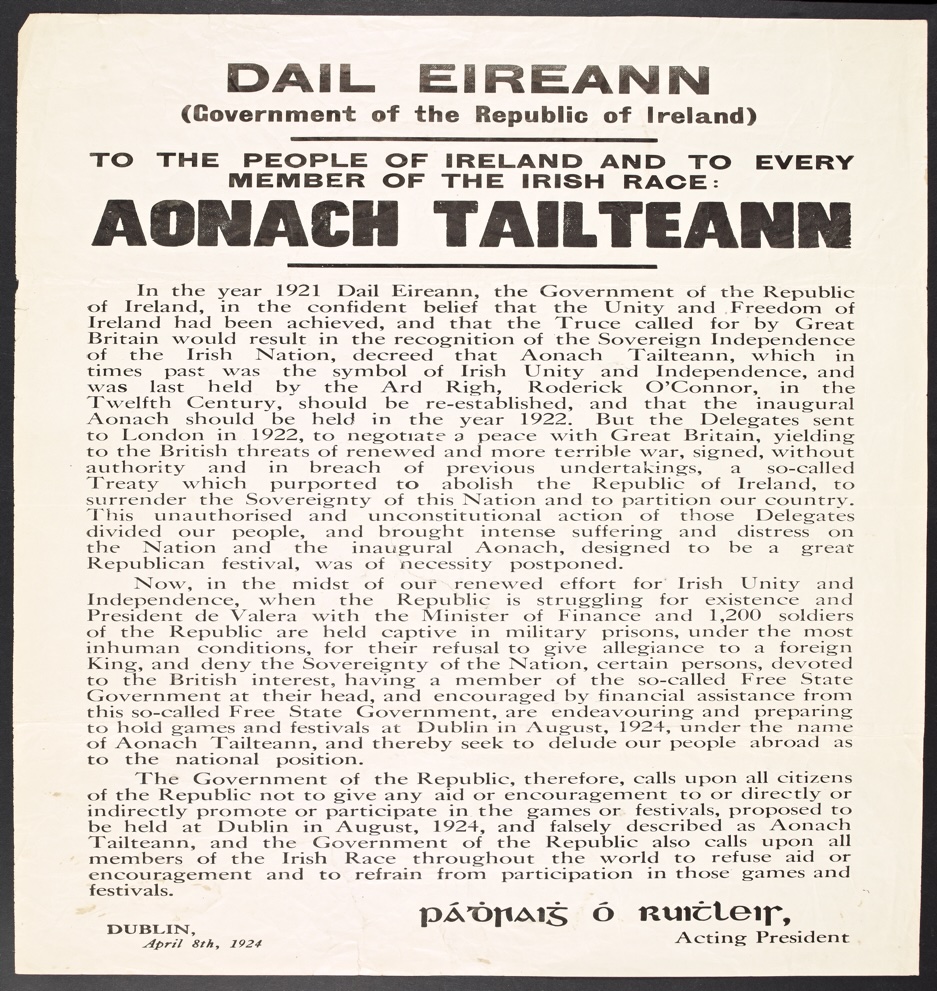
Broadside published in 1924 by the then illegitimate Republican Government discouraging people from attending the inaugural Aonach Tailteann, which was being organised by the (legitimate) Free State Government. Source: National Library of Ireland.
Planning for the Big Event
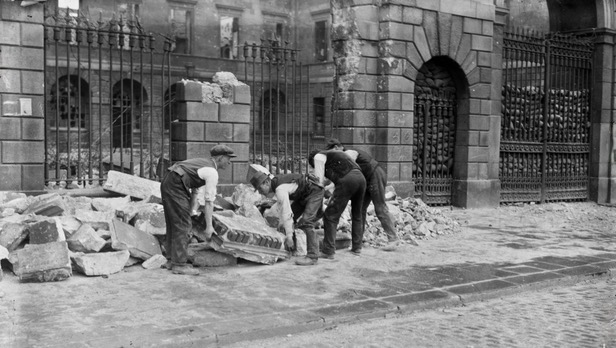
Civil War damage 1922. Workmen clearing debris at rear of the iconic Four Courts in the centre of Dublin. Images such as this would have dissuaded the American delegation coming for the proposed 1922 TG. Source: National Library of Ireland.
The complex logistics of realising the TG, involving thirty-two sub-committees, were sanctioned already by the First Dail in 1919. It was approved again in 1922 by the Second Dail, just as the British departed Dublin Castle and the birth of the Irish nation was announced, but not by de Valera’s Sinn Fein that published a pamphlet arguing for a boycott of the games as full independence had not yet been achieved.
Despite de Valera putting the planning in peril, the games won approval with crucial backing of the GAA and the global Irish diaspora.
Inevitably, Walsh, the embodiment of the games, assumed the role of master planner.
Walsh: Man of Action

JJ Walsh, here Postmaster-General, was a major force in ensuring the establishment of the Tailteann games in the face of a less than enthusiastic government attitude for such an enterprise. He managed to obtain the necessary funding despite the financial tribulations of the Irish Free State. Source: National Library of Ireland.
The astute appointment of Katherine Gifford Wilson (1857-1957) as Walsh’s secretary ensured continuing nationalist support.53 She was one of the iconic Gifford republican sisters and Grace her younger sister married Joseph Plunkett, one of the leaders of the Easter Rising, hours before his execution.
Walsh, this driven and arrogant man, had held the organizing committee together during the savagery of the Civil War. He secured a grant of £6000 to kick-start the planning process and a further £10,000 to refurbish Croke Park for the opening and closing ceremonies (£1.5 million in today’s money).54
One of Walsh’s more foolish actions was to ban ‘foreign’ or rather garrison games such as cricket, and rugby despite recommending the inclusion of rounders that he considered to be a forerunner of baseball.
De Valera himself was dismayed with the proscription of rugby, perhaps not surprising for a former teacher in a private college that strove to emulate the ethos of the English public school. Moreover, the games would only be open to people born in Ireland or of Irish descent from around the world (a diktat Walsh was later to rescind). Walsh was disappointed, but acknowledged that the games could not begin on 3 August 1922 as agreed.
There were a number of reasons for their cancellation, in particular because the Civil War was becoming increasingly violent, which led to the American team sending a cable that its members would not be travelling to Dublin.55 Nevertheless, Walsh, not for the first time, failed to live up to reality denying the withdrawal of the Americans and stating they would be participating. The Tailteann Art Exhibition of 1922, however, survived with Jack B. Yeats winning his class of paintings.56 The games were reset for August 1924.
Yeats: Man of the Culturati
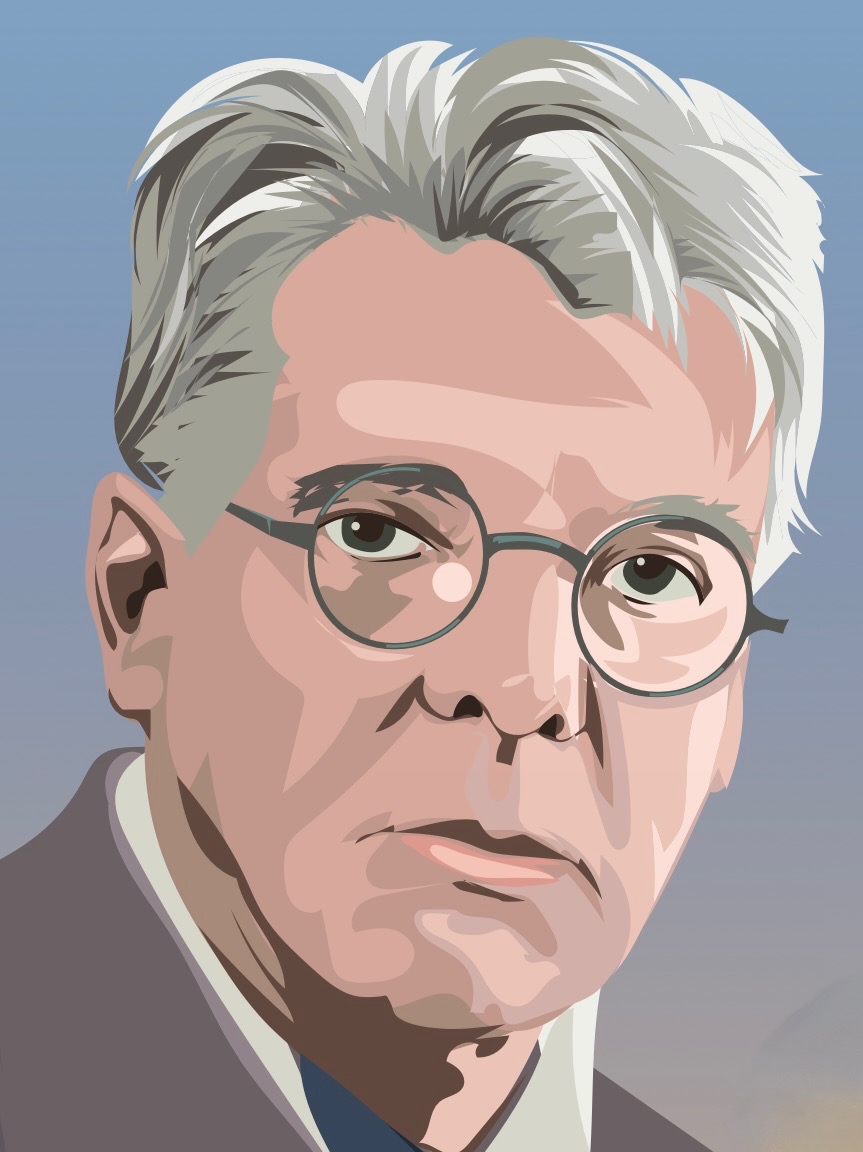
Illustration: Derry Dillon.
WB Yeats, the newly elected Nobel Laureate (1923), was appointed chair of the Aonach Tailteann Distinguished Visitors Committee.57 Ambitiously, he invited the exiles James Joyce and George Bernard Shaw, both of whom politely declined as did Sigmund Freud and Pablo Picasso.
However, the renowned painter Sir John Lavery, the world-famous tenor Count John McCormack and cricketers such as C.B. Fry accepted the invitation as did a number of foreign diplomats. WT Cosgrave, seemingly recovered from an illness, entertained these and other guests at his home in Rathfarnham. Also, a banquet was held at the Metropole Hotel with Yeats assuring guests that things were returning to ‘normality’, but unfortunately there was no electricity in the hotel so that the food had to be eaten by candlelight. However, the plebeians of Dublin had a different experience.
From mid-July 1924, a carnival atmosphere was evident in Dublin as the date of the games moved closer. 58 The streets were decorated with banners, posters, colourful streetlights and lampposts adorned with hanging baskets serving to divert attention from the ruined buildings and slums in the city centre. In keeping with the reoccurring theme of modernity, Dublin was steeped with industrial exhibitions and shop-window dressing competitions. Military bands played in the open air as did opera and theatre performances and mass gymnastic displays.
As a gesture of national identity, the government ordered post-boxes that featured the royal cipher symbols such as VR (Victoria Regina) complete with a large crown to be painted green.58 An Irish solution to an Irish problem!
Once again, another example of the power of sport to lift spirits both locally and nationally and using it as a means of nullifying the divisions brought about by internal strife. As for Yeats, having lost his ideological battle with Walsh, he was dismissed from his position of helming the visitors committee. He now devoted his time to occultism, fairy mythology, and exploring the notion of palingenesis (or rebirth) that had a role in the fascism of Mussolini.

Rather mundane poster heralding the 1924 Tailteann games showing the diversity of sporting and cultural competitions catered for. Source: National Library of Ireland.
Let the Irish Olympics Begin!
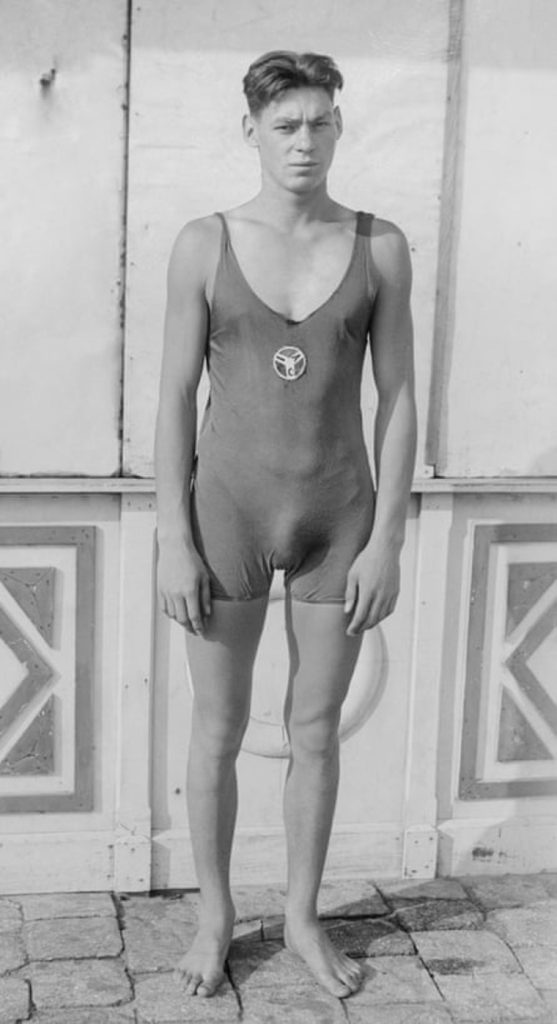
Johnny Weissmuller (1904-1980), born in Romania, he won swimming gold medals at the 1922 and 1924 Olympics games. After finishing competitive swimming, he became a movie phenomenon in his role as Tarzan.
Prior to the opening ceremony, Walsh awoke from his reverie that he was organising “the world meeting of the Gaelic race” while realising that the games needed a sprinkling of top athletes from the Paris Olympics held a few weeks previously, who had no Irish ancestry.59
This volte face resulted in the participation of twenty-three medal winners from the Paris Olympics.
To accommodate swimming events, an Irish solution: the pool at Dublin zoo was cleared of hippopotami, and where the three times Olympic champion Johnny Weismuller ((1904-1984) was to win the 100m freestyle at the upcoming TG.
In keeping with the ever-vigilant nationalist Croke before him, O’Duffy railed against ‘effeminate follies’, in other words non-Irish sports and a rather obscure category consisting of other ‘habits imported from Britain’.60
Opening Ceremony
After an address by W. T. Cosgrave at the opening ceremony on 1 August 1924, the games began with a symbolic pageant led by the actor Nancy Rock, of the Rock School of Drama and Dancing run by her mother, dressed as the mythological Queen Tailte and accompanied by an honour guard of men attired as Irish warriors with spears and wolfhounds.61
Intended as a reminder of the Gaelic heritage of the games, she wore a long Celtic dress, with 1920s ‘flapper’-like shoes just visible.
Moreover, two soldiers dressed as Gaelic warriors accompanied by Irish wolfhounds, also formed part of the pageant that amplified Walsh’s optics for the TG.
An estimated 20,000 people watched the ceremony at Croke Park that included a display by the Air Corps and ended with a spectacular show of fireworks.
On 3 August, the opening sporting event was a shinty-hurling match between Scotland and Ireland played according to a set of compromised rules and as means of promoting a shared cultural identity. The host team, made up of hurlers, lost.62

Irish Free State army officers dressed as supposedly 11th century Gaelic warriors during the opening ceremony of the 1924 Tailteann games at Croke Park. Source: National Library of Ireland.
Numbers and Medals Galore

Actress Nancy Rock, dressed as the mythical Queen Tailte, leading a female contingent at the opening of the 1924 Dublin Tailteann games. Source: National Library of Ireland.
In total, there were 6,500 competitors distributed across 20 different categories watched by 250,000 spectators over the duration of the games. More participants (including female competitors) than in Paris. Ireland had the largest number of athletes (n=39), more than USA (n=20), UK taking third place (n=20), with the host country coming second to the Americans in the medals table.64 An estimated 40,000 came to watch motorcycling on a 4.5-mile circuit in the Phoenix Park for which 50 statuettes were presented to those who won in ‘major’ events.63 Huge numbers of spectators attracted by the frisson of speed and danger watched other modern mechanized sports that included speedboat and aeroplane races, to the chagrin of purists expecting more enthusiasm for Gaelic games.
In total, 2,250 individual prizes (e.g., including for non-sporting events) were awarded and about 1000 medals in gold, and silver grey, but not bronze, being reserved for taking part in athletic events, making (relative) success easy to obtain. Newspapers made derisory comments along the lines of ‘just compete and you’ll get a medal’.
Registering who won medals proved to be an administrative step too far leading to the documentation of none or limited details about some competitors.
Closing Ceremony and Evaluations
The closing ceremony took place at Croke Park on 16 August. It consisted of music, dancing and theatrical performances that encompassed Irish myths, legends and national identity. It was attended by about 20,000 people that reflected a sense of national pride generated by the games. The highlight of the ceremony was a mass gymnastic display by five hundred boys from the Artane Industrial School (one alumni being the writer Brendan Behan).65
Both nationally and internationally, the TG were declared a resounding success. Almost without exception, newspapers lauded the enterprise, even those who had been initially hesitant about its rationale. In spite of the forebodings of Mulcahy and his nemesis O’Higgins, the games would be a financial calamity that turned out not to be the case. The success of the games augured well for those to be held four years la
The symbolism of Croke Park for the country’s indigenous sports then took a strange turn when it played host to a set-piece of Americana.
Let the ‘Foreign’ Games Begin
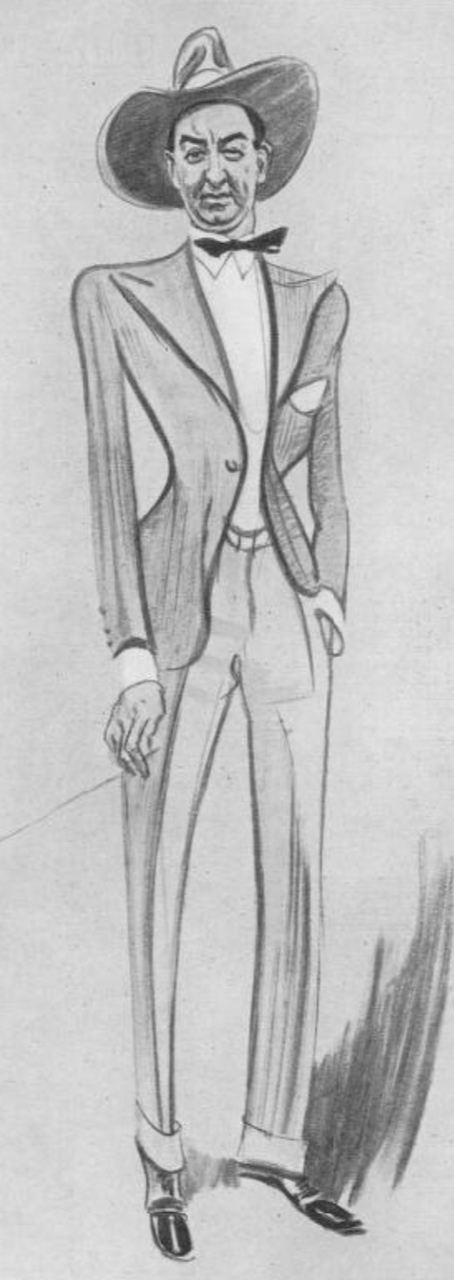
John Tex Austin caricatured by Sirra in The Bystander, 26 June 1934

Colourful more professional poster for the 1928 Tailteann games. In contrast to the 1924 poster, it includes travel information on how to reach Dublin from Great Britain and other parts of Ireland. Source: National Library of Ireland.
Just two days after the TG finished, a rodeo run by Tex Austin, a Canadian, began in Croke Park.67 Lasting seven days, it attracted over 100,000 spectators and included such feats of daring as bronco busting and steer wrestling. For more, see the Tex Austin Rodeo at Wembley and Croke Park.
While involving both cowboys and cowgirls, it clearly appealed to a variety of masculine identities in Ireland. Moreover, it was a form of entertainment that seemed far removed from British culture.
In October, Croke Park hosted a baseball match between Chicago White Sox and New York Giants, a truly foreign game.68 Running counter to the Ban on foreign games that was re-imposed until 2005, it marked an odd moment in the history of the GAA. Most probably, it was motivated by financial reasons, cash that the association needed after involvement in the TG.
Post-1924: From Concord to Discord
Ireland 1928 was experiencing a downtown in the economy, especially in the linen industry and agriculture that set it on the pathway to experiencing the effects of the Great Depression.87 The effects were evident in the country’s lack of participation in the Amsterdam Olympics and funding for the upcoming TG.
The indomitable Walsh came to the rescue to keep the Dublin games on track by raising funds privately after the government pulled back from offering financial aid.70
1928: From Dublin to Amsterdam and Back
Even though Ireland benefitted from being relatively close to Amsterdam, the country sent fewer participants compared to Paris for just athletics and boxing (Table 1 below), with Keane there in his role as Director of Athletics. Dr Pat O’Callaghan (1906-1991) who at the age of 22 became the youngest ever Irish person to qualify in medicine, won Ireland’s first gold medal in hammer throwing.71 He was regarded as the greatest Irish athlete of the time being able to sprint, hurdle, high-jump and pole vault close to Olympic standards, as well as excelling in weight throwing events other than hammer throwing.

Pat O’Callaghan (1906-1991), Ireland’s youngest medical graduate, won two Olympic gold medals in 1928 and 1932 for hammer throwing representing his newly independent country. In 1938, he went to California where he became a professional wrestler after turning down the offer to play Tarzan.
The 1928 games catered for over thirty sport categories including handball, camogie, chess, motorboat racing, and dancing. Also, there was a full complement of Gaelic games tournaments for men and women. Once again, medals were relatively easy to win as there were over 1,000 up for grabs. During the games two things stood out. First, the hammer throwing gold medal won by O’Callaghan, the last of the Irish Whales, improved on the distance he had achieved in Amsterdam. Second, water polo turned out to be one of the surprise highlights of the games after Ireland beat England.72 Needless to say, motor sports events proved once again to be a major draw for the Irish crowds.
One of the invited celebrities in attendance was Gene Tunney (1897-1978), world heavyweight champion, who was tracing his Mayo ancestry combined with watching boxing matches in Dublin.73 He was royally entertained with a reception and dinner at the Gresham Hotel. Among those to sign a dining table card announcing the reception in his honour was the chairman General Eoin O’Duffy, who had been Chief of Staff of the National Army during the Civil War. By the end of the games, however, there was palpable waning of support for the games by the government and the media. Thus, staging the third TG planned for 1932 was not assured.
1932: From Dublin to Los Angeles One Way
Fewer than ten competitors for just athletics and boxing, together with those from other countries, travelled on a 14-day journey aboard the SS California to Los Angeles via the Panama Canal. O’Duffy raised the money for the journey and became chef d’équipe to the team responsible for the selection of athletes.74
O’Duffy was accompanied by Keane as chef de mission who liaised with Olympic officials (a good choice given O’Duffy’s abrasive character).

Rob Tisdall winning the 400m hurdles for Ireland in 1932 Olympics, an outstanding achievement given he had only competed at the distant a few times previously. Source: Alamy.
O’Callaghan, now in his prime, won the hammer throwing event for a second time attaining a distance of 52.9m.
When trying to adjust his spikes before stepping into the concrete circle, another Irish athlete, Rob Tisdall (1907-2004), helped him to file them down. Prior to the intervention, Tisdall won the 400m hurdles in a time of 51.7s, a world best, but not a world record as he knocked over the last hurdle that was a rule-breaker at the time.
Born in Ceylon, now Sri Lanka, Tisdall worked as an aide to a wealthy young Indian Maharajah on a European tour.76 He took time out to write to the ubiquitous O’Duffy, now President of the Irish Olympic Council, putting forward his case as why he should be selected for the 1932 Los Angeles games to run in the 400m hurdles, an event he had only run once before.
O’Duffy invited him to Croke Park to test whether Tisdall could run the event in 55s or less; he did and Los Angeles beckoned. Like O’Callaghan, he put his success down to the team masseuse Tommy Maloney who used a mixture of olive oil and poitín.94 Tisdall: yet another life-lived worth making into a film.
The sporting achievements of O’Callaghan and Tisdall resonated throughout the country helping to promote a sense of national pride, a habitus shared across the social classes during an economic downturn.75 The two were transported in a cavalcade through Dublin to cheering crowds and were guests at a sumptuous dinner with de Valera, the new President. There were two eponymous delicacies included in the menu: ‘Pudding Souffle O’Callaghan’ and ‘Grape Fruit Tisdall’.77
On returning home to Kanturk in County Cork, O’Callaghan, acutely aware of the symbolism embodied by his achievement, made a statement that encapsulated his affection for his country:
“I am glad of my victory, not of the victory itself, but for the fact that the world has been shown a flag, that Ireland has a national anthem and the fact we have a nationality.” 78
Despite Keane being in overall charge of the TG (Walsh having stepped down), they did not get off to an auspicious start. Initially scheduled to be held in 1931 to avoid conflicting with the 1932 Los Angeles Olympics, the effect was that TG became a domestic enterprise, with the Irish team under the leadership of O’Duffy having already sailed for Los Angeles. Moreover, international talent could not be decanted from California to Dublin given the distance. If that was not enough, the one-week games clashed with the Eucharistic Congress hosted in Dublin that drew one million people to the mass in Phoenix Park compared to 30,000 who attended the opening ceremony.79

Table 1: Ireland’s sports participation in 1924, 1928 and 1932 Olympics showing number of male and female competitors, medals and sports for each year. Note that after 1924, numbers across the four categories decreased. Sources: Ireland at the 1924 Summer Olympics, Wikipedia; Ireland at the 1928 Olympics Wikipedia; Ireland at the 1932 Summer Olympics, Wikipedia.
The 1932 TG went down in history as a failure such that the newly elected Fianna Fáil government headed by de Valera decided to discontinue the games. Walsh had a fit of conniption and left the organising committee in high dudgeon. However, he did not go quietly into the night. Rather, he canvassed vociferously not only for a fourth TG, but also for the 1936 Olympics to be held in Dublin.80 His ally O’Duffy, in turn, lobbied for the 1940 Olympics to be held there.
Gaining no traction, both men decided to focus their interests elsewhere and turned to the promotion of National Socialism in Ireland. Under the governance of Fianna Fáil and supported by the Catholic Church, the notion of self-sufficiency was assumed, allied to an enforced strand of isolation in the face of the trade war with the British. As a consequence, sport in Ireland suffered from a lack of international competition, which took at least a couple of decades to recover from.
The policy of isolationism, however, proved beneficial for indigenous sports. The distraction of ‘foreign’ sports began to diminish and as consequence Gaelic games witnessed a sustained surge in attendances during the 1930s.81 Having successfully addressed its internal struggle for control, the GAA grew in power to become a cultural icon and the all-but unquestionable authority on all-things Gaelic sports. The association seized the opportunity to promote itself as the only sporting organization that could ensure and maintain the health, and strength of the nation. In short, it became a self-proclaimed pillar of vigorous Irish nationalism.
Finally, advice a grandfather (mine) gave to his young grandson (me) about what you can achieve through perseverance:
De réir a chéile a thógtar na caisleáin agus is in éindí a chéile a thógaimid na cáisléain.
[It takes time to build castles and in our togetherness (as a team) castles are built].
It certainly took time to build a unified case for the TG ‘castle’ and acting on it. Considering the circumstances encountered along the way, an amazing achievement taking into account the precarious financial state of the country, but within a decade or so the castle was demolished.
In memory of Andrew Verdon (1870-1955)
End-Notes
1 Title of song written Thomas Davis (1814–1845), founder of the Young Ireland Movement that was focused on gaining independence from Britain.
2 Conor Heffernan ‘An Irish Race Convention? Body Politics and the 1924 Tailteann Games’ Irish’, Irish Economic and Social History (2019).
3 F. Delmotte, ‘Identity, Identification, Habitus: A Process Sociology Approach’, in: The Palgrave Handbook of the History of Human Sciences, in David McCallum ed. (Singapore: Palgrave, 2022).
4 Natalie Koch, ‘Sport and Soft Authoritarian Nation-Building’, Political Geography 32 (2013), 42-51.
5 Christopher Hibbert, Mussolini: The Rise and Fall of Il Duce (New York: Barnes & Noble, 2008).
6 JRome, Mussolini’s Architectural Legacy in Rome 13 January 2016, via https://romeonrome.com/2016/01/mussolinis-architectural-legacy-in-rome/
7 Michael Laffan, Judging W.T. Cosgrave: The Foundation of the Irish State (Dublin: Royal Irish Academy, 2014); Ciara Meehan, The Cosgrave Party: A History of Cumann na nGaedheal, 1923–33 (Cambridge: Cambridge University Press, 2015).
8 Fearghal McGarry, Eoin O’Duffy: A Self-Made Hero (Oxford: Oxford University, 2005).
9 Mark Phelan, ‘An Irishman’s Diary on Pilgrimages through Mussolini’s Italy’, Irish Times (6 Jan 2017).
9 Mike Cronin, ‘Entrepreneurship in an Amateur World: The Gaelic Athletic Association in Ireland’ The International Journal of the History of Sport 35, (2018): 694-708; General Eoin O’ Duffy: Garda Commissioner and GAA official, Ireland’s Eye, (1 August 2021), https://irelandseye.ie/general-eoin-o-duffy-garda-commissioner-and-gaa-official
10 Ibid., Fearghal McGarry, 2005.
11 Mike Cronin, William Murphy and Paul Rouse eds. The Gaelic Athletic Association1884-2009 (Dublin: Irish Academic Press, 2009).
12 Marcus De Bruca, Michael Cusack and the GAA (Prestatyn Flintshire: Anvil Books, 1995).
13 Paul Rouse, Maurice Davin (Dublin: Dictionary of Irish Biography 2009).
14 Seán Moran, ‘Cusack’s Creation is a Blooming Legacy’, Irish Times, 16 June, 2004.
15 Bernard O’Hara, Davitt: Irish Patriot and Father of the Land League (Tewkesbury: Gloucestershire: Tudor Gate Press, 2010); Mark Tierney, Croke of Cashel: The Life of Archbishop Thomas William Croke, 1823-1902 (Dublin: Gill, 1976); Frank Callanan, Parnell, Charles Stewart (Dublin: Dictionary of Irish Bibliography, 2009).
16 Frank Callanan, The Parnell Split, 1890-91 (New York: Syracuse University Press, 1992), Richard McElligott, personal communication
17 Jack Dorney, ‘The Fenians: An Overview’, The Irish Story (7 March 2017); Matthew Kelly, ‘Home Rule for Ireland – For and Against’, Historical Association, 26 January, 2015.
18 Richard McElligott, Richard Blake: The Resurrection of the GAA, Ríocht na Midhe, Records of the Meath Archaeological and Historical Society , XXIV (2013), 256-269; Thanks to Richard NcElligott for bringing my attention to Richard Blake.
19 Gareth Fulton and Alan Barnier, ‘Sport, Space and National Identity in Ireland: The GAA, Croke Park and Rule 42’, Sport and Polity, (26 June 2007).
20 Seán Moran, ‘1913: The Year the GAA Really Started to Get Its House in Order’, Irish Times, 1 June 2020.
21 Cathal Brennan, ‘The Tailteann Games, 1924-1936’, The Irish Story (23 February 2011).
22 Barry Sheppard, ‘The Gaelic League in the Irish Free State in the late 1920s and 1930’, The Irish Story (2 August 2012).
23 Mike Cronin, ‘Projecting the Nation through Sport and Culture: Ireland, Aonach Tailteann and the Irish Free State, 1924-32’ Journal of Contemporary History, 38 (2003): 395-411.
24 Paul Rouse, Sport & Ireland (Oxford: Oxford University Press, 2015).
25 Ronan Fanning, Éamon de Valera: A Will to Power (London: Faber & Faber, 2015).
26 Mike Cronin ‘The Gaelic Athletic Association’s Invasion of America, 1888: Travel Narratives, Microhistory and the Irish American ‘Other’’, Sport in History 27 (2007):190–216, https://www.irishtimes.com/culture/heritage/diary-reveals-how-hurlers-absconded-in-new-york-1.2597055
27 Ibid
28 W.F. Mandle, The Gaelic Athletic Association & Irish Nationalist Politics, 1884-1924 (London: Gill & Macmillan, 1987).
29 Tim O’Brien, ‘Davitt’s Legacy was an ‘Apolitical GAA’’ Irish Times (18 August 2006).
30 Jason K. Knirck, ‘The Dominion of Ireland: The Anglo-Irish Treaty in an Imperial Context’ Éire-Ireland 42, (2007): 229–255.
31 Marie Coleman, Keane, J.J. (Dublin: Dictionary of Irish Bibliography, 2009); Patrick Long, James Joseph Walsh (Dublin: Dictionary of Irish Bibliography, 2009).
32 Patrick Maume, Walsh, James Joseph (Dublin: Dictionary of Irish Bibliography, 2009).
33 Gerard Hanley, ‘They ‘Never Dared Say “Boo” While the British Were Here: The Postal Strike of 1922 and the Irish Civil War’, Irish Historical Studies 46 (2002): 119-135.
34 Personal communication Mike Cronin 22 July 2024.
35 Kieran Glennon, From Pogrom to Civil War (Cork: Mercer Press, 2013); ‘No End to Dublin Fire Brigade Strike as Workers Challenge Corporation Cut to Wages’ RTÉ News (May 1923).
36 Maryann Gialanella Valiulis, ‘The ‘Army Mutiny’ of 1924 and the Assertion of Civilian Authority in Independent Ireland’ Irish Historical Studies 23, (1983).
37 Pádraig Ó Caoimh, Richard Mulcahy: From the Politics of War to the Politics of Peace 1913-1924 (Dublin: Irish Academic Press, 2019).
38 C.S. ‘Todd’ Andrews, Dublin Made Me (Dublin: Lilliput Press, 2001).
39 Arthur Matthews, Walled In By Hate: Kevin O’Higgins, His Friends and Enemies (Dublin: Merrion Press, 2024).
40 Ibid., Cathal Brennan 2011.
40 R.F. Foster, W. B. Yeats: A Life II: The Arch-Poet 1915-1939: 02 (Oxford: Oxford University Press, 2005); Ann Saddelmeyer and Colin Smythe, eds. Lady Gregory: Fifty Years After (New York: Barnes & Noble, 1987).
41 Robert Folkenflik, Folklore, Antiquarianism, Scholarship and High Literary Culture iLiterature and Social and Institutional Change Part IV, ed. John Richetti (Cambridge: Cambridge University Press, 2008).
42 Patrick Walsh, ‘Daniel Corkery’s ‘The Hidden Ireland” and Revisionism’, New Hibernia Review, 5, (2001): 27-44.
43 Patrick F. McDevitt, ‘Muscular Catholicism: Nationalism, Masculinity and Gaelic Team Sports, 1884–1916’, Gender & History 9, (1997): 262–284.
44 Paddy Bermingham (athlete), Wikipedia 2023, https://en.wikipedia.org/wiki/Paddy_Bermingham (athlete); Oliver O’Hanlon, ‘Jack O’Grady Gentle giant – Oliver O’Hanlon on John O’Grady, Ireland’s Flag Bearer at the 1924 Olympics’, Irish Times, 4 August 2024.
45 Kevin Martin, The Irish Whales: Olympians of Old (New York: Lanham Maryland Bowman & Littlefield, 2020).
46 Bruce Arnold, Jack Yeats (New Haven: Yale University Press, 1998); Richard Carter, ‘Oliver St John Gogarty, MD (1878–1957): Quintessential Irish Literary Renaissance Figure’ Journal of Medical Biography 14 (2006): 118-123.
47 Ferghal McGarry, Hilliard, Robert (‘Bob’) Martin (Dublin: Dictionary of Irish Bibliography, 2014).
48 Giles Tremlett, The International Brigades: Fascism, Freedom and the Spanish Civil War (London: Bloomsbury Publishing, 2021).
49 Sparcatus Educational Battle of Jarama 2021, here.
50 Paddy Dwyer Irish Boxing’s Amazing Olympic History (10 May 2016).
51 Remembering Larry Stanley, GAAie (28 June 2024).
52 Dave Eminian, ‘How a Small Peoria-Area High School is Connected to a Legendary Olympic Gold Medalist’, Peoria Journal Star, 2021, https://www.youtube.com/watch?v=nBrMv0yACPY
53 Lawrence White and Patrick Long Wilson, Katherine Anna Gifford (Katie) (Dublin: Dictionary of Irish Bibliography, 2011).
54 Paul Rouse, ‘Tailteann Games Were Aimed at Ensuring New Nation Made a Splash’, Irish Times 27 October 2023.
55 Paul Rouse, ‘3 August 1922: ‘The Abandoned Tailteann Games’, RTÉ.ie. Century 1913 IRELAND 1923 (3 August 2022).
56 Billy Shortfall ‘The Story Behind the Aonach Tailteann Art Exhibition in 1922’, RTÉ.ie. (16 August 2022).
57 Cronin, Projecting the Nation Through Sport and Culture: Ireland, Aonach Tailteann and The Irish Free State, 1924-32, Journal of Contemporary History, 38 (2003): 395-411.
58 Colmán Stanley, ‘The Ancient Irish Óenach and the Tailteann Games’, University Observer 22 September 2018.
58 Ireland Tour Guide, Post Boxes Through The Years – and Postmen! n.d.,
https://www.irelandtourguide.ie/single-post/2019/11/12/post-boxes-through-the-years-and-postmen
59 Siobhan Doyle, ‘The Rise and Fall of the Tailteann Games’, RTÉ Brainstorm 17 April 2024.
60 Dr. T.W. Croke, ‘Archbishop of Cashel, “Letter from Archbishop Croke to Michael Cusack on the GAA”’, James Joyce Digital Interpretations, 2024.
61 Louise Ryan, ‘The Aonach Tailteann, the Irish Press and Gendered Symbols of National Identity in the 1920s and 1930s’ in Sport and the Irish: Histories, Identities, Issues, ed. Alan Bairner (Dublin: University College Dublin Press, 2005).
62 ‘Hurling Shinty International 1924 Launch’, GAAie 15 October 2024.
63 Ibid., Cathal Brennan 2011.
64 Ibid.
65 Brendan Behan 1926-2002, Encylopedia.com n.d., https://www.encyclopedia.com/arts/educational-magazines/behan-brian-1926-2002
66 ‘Tailteann Games – Ireland’s ancient Olympics’, Irish Post, 2 March 2022.
67 Conor Heffernan, ‘Oh, Oh Rodeo!!’: American Cowboys and Post-Independence Ireland’, Irish Economic and Social History 49, (2022).
68 ‘A Forgotten First Pitch: Baseball at Croke Park in 1924’, Irish Baseball Society 21 January 2024.
69 Mary E. Daly, ‘The Irish Free State and the Great Depression of the 1930s: The Interaction of the Global and the Local’, Irish Economic and Social History, 38 (2011): 19-36.
70 Colmán Stanley, ‘The Ancient Irish Óenach, and the Tailteann Games’, University Observer 22 September 2018.
71 Mike Cronin, ‘Not Quite Free? Irish Postcoloniality and the Career of Pat O’Callaghan’ The International Journal of the History of Sport, 32 (2015): 899–908.
72 ‘Irish Post Tailteann Games – Ireland’s ancient Olympics’, Irish Post, 2 March 2022.
73 Jay R. Tunney and Christopher Newton, The Prizefighter and the Playwright: Gene Tunney and George Bernard Shaw (Caerphilly: Firefly Books, 2010).
74 An Fear Rua, ‘General O’Duffy … a Soft Spot for Hurlers’ The GAA Unplugged 6 December, 2006.
75 Team Ireland, ‘Track’s Golden Hour | Los Angeles 1932’, https://olympics.ie/tracks-golden-hour-los-angeles-1932/
76 ‘From Ceylon to Gold: The Remarkable Journey of Bob Tisdall’, Run Republic 1 July 2024.
77 ‘A Glorious Hour Irish Sport May Never See the Likes of Again’, GAA Balls Teams 27 July 2021.
78 Paddy Coffey, This Day in Irish History (Dublin: The O’Brien Press, 2021).
79 Diarmaid Ferriter, ‘Pope and Ceremony: How the 1932 Congress Melded Church and State’, Irish Times, 2 June 2012.
80 Paul Rouse, ‘Could There Have Been a Contender? When Dublin Dreamed of Hosting the Olympics’, Irish Examiner, 5 August 2021.
81 Seán Crosson and Dónal McAnallen, ‘CROKE PARK GOES PLUMB CRAZY’ Media History, 17 (2011): 159-174.