
The original audio version of the eulogy is available here:
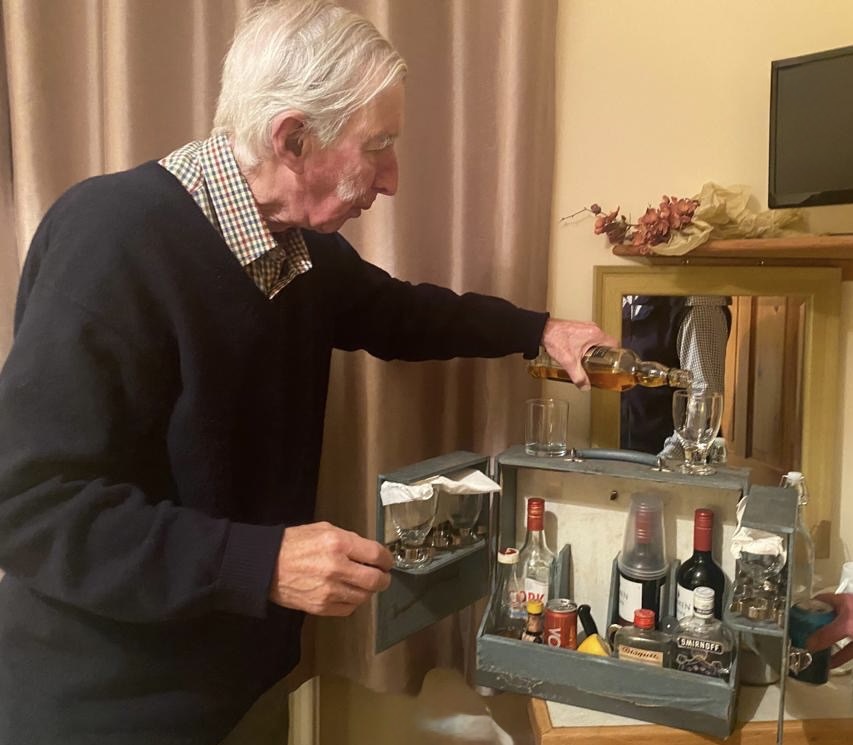
Ben Rathdonnell and his magical drinks cabinet.
A eulogy to our father, who died on 28 February 2025.
Delivered at St Mary’s Church, Rathvilly, County Carlow, at his funeral service on the afternoon of Ash Wednesday, 5 March 2025.
*****
Benjamin, Ben, Pops, The Lord, Nibby …. He was a man of many names.
Our father was born in the sky. Quite literally. When he was born, Lisnavagh House – his family home– was treble the size it is today. He was born in a bedroom in a part of the house that was dismantled when he was a teenager. That part is now a lawn. But he loved walking on that lawn and telling people how he was born “just up there”. They would, of course, be somewhat startled by the concept.
He was born on the 17th of September 1938, and baptised in this very church. He was the first-born child, and only son, of Bill and Pamela Rathdonnell. They had married a year earlier and were just settling into Lisnavagh at this time. Bill – who was only 24 when Dad was born – had just succeeded his own father, who died young.
Dad was barely a week old when the British prime minister Neville Chamberlain came back from a meeting with Hitler in Munich and declared “Peace for our time.” Well, a year later, the world was at war and Dad’s father set off to fight the good fight. By the time Dad was five years old, his father was commanding a squadron of tanks and chasing Nazis through Belgium and Schleswig-Holstein.
Meanwhile, Dad’s mother was in England and Belfast, working with the WRNS, intercepting signals from German U-boats, and decoding Morse code, the dashes and the dots and all that.
So he grew up at Lisnavagh for the first seven years of his life, without much sight of either parent. Nonetheless, they managed to create three younger sisters for him – Katherine (dear Pally), Jane and, eventually, Rosebud. They were the Nibbies.
Pamela – their mother – was home at Lisnavagh in time for VE Day, the day Nazi Germany finally surrendered. One of Dad’s earliest memories was of watching his mum light up a huge pile of straw in the Cow Field that night as a celebratory bonfire. It was, my father remarked, ‘a perfectly good rick of straw’. He was rarely one to promote such wanton destruction!
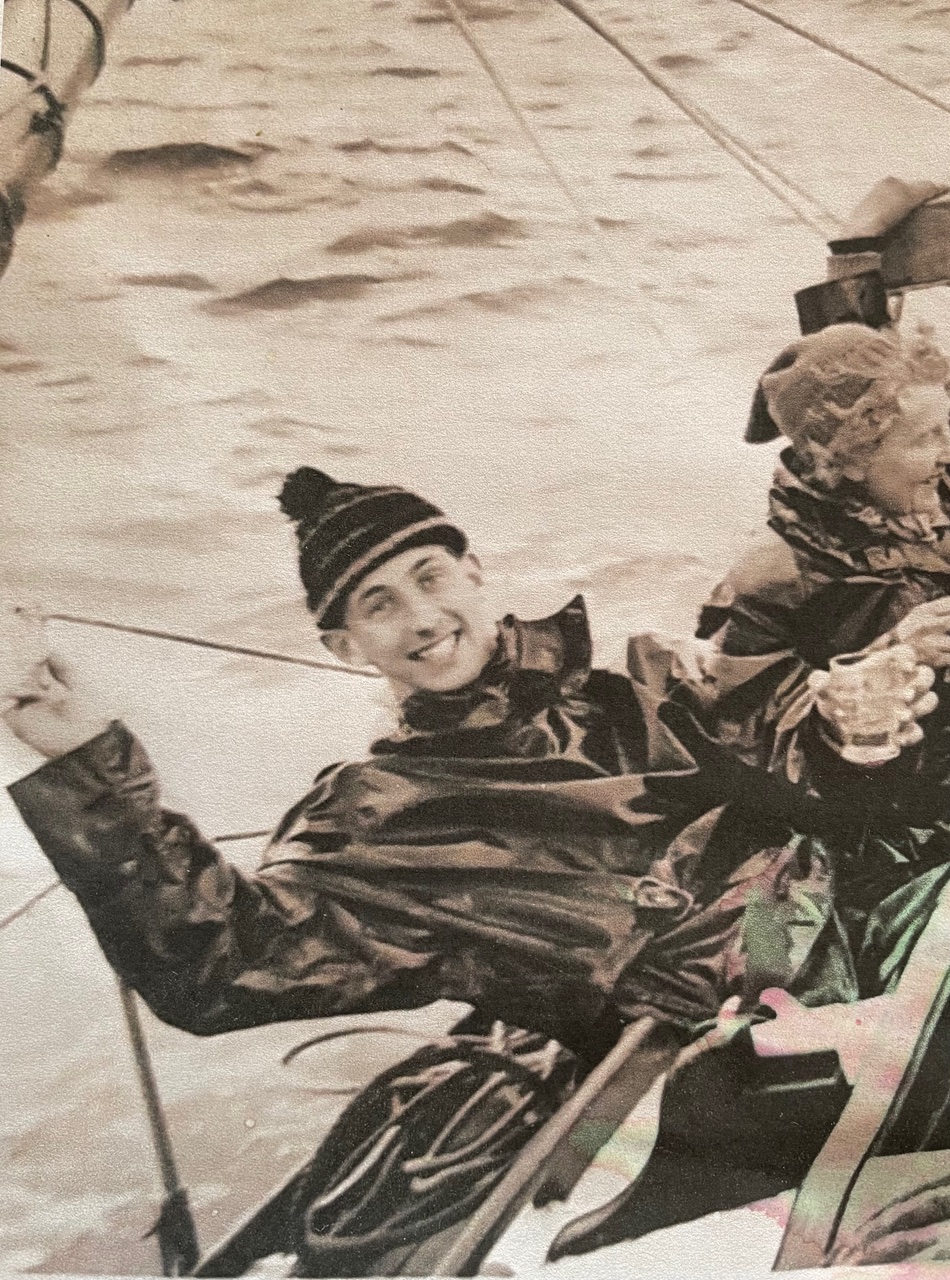
Dad’s first schooling involved walking from Lisnavagh to the Old Rectory, or sometimes he rode a pony, where he was educated by the Rev. Matchette. His school trips became a little longer when he was dispatched to England at the ripe old age of seven. He started at Aysgarth, a prep school near Wensleydale in the depths of North Yorkshire. Having been incarcerated there for five years, he spent another five years at Charterhouse, a boarding school in Surrey, where my brother William also went. He seems to have enjoyed his school days, from what I could tell, but fundamentally it gave him his rich love for the sea.
When we were children, my brothers and Sash and I developed a game that we would play with Dad. He was not entirely aware that we were playing the game. It was called “When I Was in the Navy.” What we had to do was start a conversation with Dad about any topic in the whole wide world, whatever you want, tidily winks or Tokyo or traffic cones on the N81. And then you would set the timer and see how long it would take before Dad said, ‘When I was the Navy …’
Somehow, he would brilliantly segway the conversation so one moment you’d be talking about traffic cones and then, just like that, you’d find yourself listing to Dad’s views on how to lay out sonars on the ocean surface as an anti-submarine manoeuvre.
When I was in the Navy … He never disappointed.
But the oceans, the navy … that was just such a huge part of him. It started, I think, when he began chugging back and forth across the Irish Sea to go to school each term.
His mother Pamela was from the Lake District in England, and she and her wonderful sisters, Diana and Golly, used to bring Dad and his sisters out sailing on Lake Windermere, a huge lake in Cumbria, close to where Granny had grown up and where her sisters still lived.
Pamela was really quite a remarkable woman. A fine artist, she loved painting ships and airplanes and mechanical engineery stuff. She was official artist to the RAF at the time of Queen Elizabeth II’s coronation in 1953. As part of that, she bought 14-year-old Dad to the Naval Review at Spithead, which was an incredible spectacle for him – 200 Royal Navy battleships lined up for an evening of 21-gun salutes and one of the greatest fireworks displays ever seen up until that time.
Dad was absolutely hooked. He saw those ships and he wanted to be on one. In 1955, 16-year-old Dad sat his Royal Navy exam in Dartmouth and he … failed.
Because of his eyesight. He was colour blind. You can’t be colour blind in the navy because the navigation lights, and warning signals, and communication systems, are all colour coded so you need to be able to identify the right colour! This was, I remind you, back in the Cold War, when Russia was Enemy No. 1. D’you remember those days?
The Royal Navy says “sorry son, you can’t see colours correctly,” and show him the door. He goes back to Charterhouse, where he is now head of the school’s naval section, and he carries on sailing on the lakes and the seas every opportunity he can get.
In 1957, he returns to Dartmouth for another eye examination. This time he’s somehow got hold of all the Ishihara colour blindness charts, and he’s memorised all the answers. He resat the exam. And he passed. “So you cheated!?’ I said to him when he revealed this deceit to me about a decade ago. “Of course I cheated!”, he retorted hotly. “It’s called initiative, young man”.
So he’s now in the Royal Navy, through the door, a cadet at the Naval College in Dartmouth, alongside his old school pal Charlie Dallmeyer. Dad spent the next 8 ½ years in the Navy. His forté was admin and secretarial work. He was really good at that, and he ended up being secretary to a top notch Admiral over in what was called the Far East Station.
That was absolutely the making of the man, and a time of immense excitement for him. As I say, it was the time of the Cold War and he served on a number of different destroyers and frigates and what not. Andrew brilliantly sourced photographs of a bunch of them and had them framed a few years ago; they were all hung on Dad’s dressing room wall. HMS Belfast and the Girdle Ness and Ark Royal, an aircraft carrier with a ship’s company of over 2,500 souls.
And so that was the Navy years. NATO exercises to Norway, the North Sea, to Gibraltar, and Malta. Over to Hong Kong, Singapore and Saigon, and a strange skirmish in Brunei that we never really got to the bottom of.
When asked if he was involved in the Cuban Missile Crisis, he gleefully replied that he was, in fact, anchored off the southwest of New Zealand’s South Island, at the time, which is about as far away as you can get from Cuba … a nice cushion of about 7,500 miles.
It took him a long time to confess that he was a veteran of the Second Cod War. You probably haven’t heard of the Second Cod War. Indeed, I have a hunch you might be a little rusty about the First Cod War. But there were in fact Three Cod Wars and Dad, as I say, was a seasoned veteran of the second one. He hated it actually. The Navy were sent to Iceland to bully the poor old Icelandic fishermen who were fishing for cod in waters that the British government claimed to belong to them. The upshot was a very strange showdown between the Royal Navy and the good fishermen of Iceland. It wasn’t exactly the battle of Trafalgar. As far as I can work out, Dad seems to have been rooting for Iceland throughout the conflict.
He was like that sometimes. He didn’t always go the direction you might expect. One of his aunts stopped speaking to him for a month or two after he wrote an essay suggesting that Admiral Nelson wasn’t all he was cracked up to be. And, much later, during the Falklands War, I think he was tipping his trilby to Argentina.
Dad resigned from the Navy in 1964, two weeks after the press announced his engagement to our dear mother Jessica, Jessica Butler as she was, a fine and bonnie lass from Bennetsbridge, County Kilkenny.
They were wed in St Canice’s Cathedral, Kilkenny, in 1965, 60 years ago this coming October. Dad’s best man, Sir Richard Butler, has come from Malta to be with us here today. Thank you, Richard.
After the wedding, my parents settled at Lisnavagh. That was, as I say, six long decades ago. Lisnavagh had changed a lot since Dad was a young fellow. In 1952, as I mentioned earlier, the house was radically “resized” with two thirds of it taken down. His father, the fun-loving 4th Baron Rathdonnell, then died at the age of 44.
Dad was only 21, and making his way through the navy at the time. His father’s death was a heavy blow to him and his three younger sisters and to his mother, to Pamela. She was, as I say, quite a character – always lively, always enigmatic, a fabulous grandmother and great fun – but probably a little tricky for him. She longed to be the first woman on the moon, for instance. She was married again in 1962 to Major Hugh Massy who some of you might remember.
So, 21-year-old Dad is now the 5th Baron and Lisnavagh had basically become his responsibility. He remained in the navy for five more years before resigning to forge a new path.
Goodbye, HMS Ark Royal. Hello HMS Massy Ferguson.
I only ever knew him as a farmer. In my childhood, he was forever grappling with the problems of drainage and potholes and sheepdip, whirling around the estate in his Renault 4, known in certain quarters as the Lord’s Lamborghini.
But he took on the farm and he did what he could to improve it over the years. Like the Renault 4, the whole place was kind of held together by bailer twine, but somehow – and maybe memory is kind – somehow, the place always seemed spic and span and orderly.
He started out cattle farming. Bred pedigree Shorthorns, then switched to sucklers, and loved it, but alas it all fell apart when brucellosis struck.
He then sort of pioneered the concept of indoor lambing. By the time we were in our 20s, there were a thousand ewes giving birth to over 1500 lambs at Lisnavagh every spring.
In the summers, he was forever up on the New Holland combine, harvesting fields of barley and wheat, sometimes clad in his Plus Fours or wearing one of the crazy hats Sasha gave him when she got back from one of her exotic adventures.
He installed a windmill at Lisnavagh, as well as a wood-chip boiler and a brilliant wind-fan system for drying oats, straw and indeed, the wood chips.
He was a tremendous tree planter. I know his grandchildren will forever associate him with tree-sleeves. You see them everywhere at Lisnavagh, because he was always planting. Oak, beech, cherries, chestnut, yew … and all those trees, growing taller even as I speak, glorious sanctuaries for all creatures, great and small. Such a marvellous legacy.
Some of you will know those woods from the glory days of the Lisnavagh Syndicate, which he ran for several happy decades, with the help of dear Andy Verney, his trusty manager for so long. Forward! Push ‘em out! And to those who do recall the Syndicate, please know that Dad continued that tradition of taking his Tuesdays a little lightly by occasionally venturing into Carlow for a pint of warm beer.
He was involved in so many other things. Some of you will have known him from his work on the Diocesan Council or, specifically, with this diocese, with this church, this parish, with Disraeli School Bough, with the Orphan Society, with the Butler Society, with St. Michael’s House in Dublin.
Others knew him from the Tullow Show, the Spring Show and the Dublin Horse Show. He was Chief Steward of the Veterinary Paddock, where my brothers and I all worked under him as volunteer stewards. Coincidentally, Dad had laid on a free bar at the paddock for all volunteer stewards and vets – a perfect trade-off, which he oversaw splendidly.
Then there was Lisnavagh itself, which he and Mum ran for forty years. Running a Big House is no easy thing. Every day: a new hazard. Dry rot in the rafters, jackdaws in the chimney, slates sliding off a roof, the sudden emergence of a major fault-line in a bedroom ceiling. Dad spent a large portion of his life sporadically trying to right those daily wrongs … and indeed, that is the daily challenge for my brother William and his wife Emily to this day.
Things That Dad Didn’t Really Like. Well, we’d be here a very long time if we stayed on this theme, but the electric scooter was high on his list. And he was never at ease with an orange. Or swimming trunks. Or nails. Or Google Maps. We went with Pop Nav. And as for airports … eeeugff.
On the other hand, he loved pink gin and fishing rods and musicals – and, bizarrely a few Bob Dylan tracks and ice skating. Smoking jackets too. He was always so dapperly dressed, even in his pyjamas! When we were kids, he was never without a trilby or a bowler or a fine peakie cap. Throw in those Dickensian whiskery frontburns of his, and it was all so fabulously furry and formal.
He had his quirks too. Whenever he travelled abroad, he would invariably bring two things to read – the Carlow Nationalist and the Diocesan Magazine. Literally that was it. What more would you require? Well, a portable drinks cabinet, obviously … And to that end, he had a little blue masterpiece that accompanied him and my mother on many a road trip around Ireland.
So here we are to bid him farewell on this beautiful spring afternoon. So many lovely faces in the congregation, so many last night, and we have all been absolutely inundated with expressions of condolence.
I salute his sister Katherine, Pally to us, the last of the Nibbys, an inspiration to us all, and her marvellous brood of descendants. I know many of you will recall his other delightful sisters Jane and Rosebud. And his daughters-in-law, Emily, Nics, Ally, and you too Tommy Sykes, he adored you all.
When I was a wayward bachelor, he gave me some fine advice on marriage. First up, he said find someone who isn’t into horses. (Sorry Mum). He also said: Find someone who can laugh with you long after it’s ceased to be remotely funny.
Dad would never have been able to achieve any of the things he did without the support of our mother, his Guardian Angel, who lived with him for 40 years at Lisnavagh House and twenty at Kinsellagh’s Hill.
It is amazing they got almost 60 years together. It might have been half that. 1990 was Dad’s first scrap with cancer. Since then, my goodness, he has been the King of the Jump Scare. So many near misses. Cancer. Car crashes. Near drownings. Septicaemia. A splash of ecoli and whatever you’re having yourself.
The fact is that today’s event, sad as it is, might have taken place any number of times over the past few decades. Especially when we were told he was a certain goner 12 years ago. He was a medical marvel. Warrior-like he resurrected himself again, and again. He was HMS Indomitable.
That awareness that Dad was living on borrowed time has been massive for us as a family. It is also what made him and Mum so active. Every time we blinked, they were off another adventure. Constant outings with the Tree Society. Or they would up and away to see places and people they loved in other lands. Fishing with old pals in the Scottish Highlands or the West of Ireland, revisiting old haunts in Malta, or France, or the places where they honeymooned in Spain. Only a couple of years ago, Dad took Mum on a week-long, 850-mile tour of Normandy. We also had our own family outings in which my siblings and I joined our parents for holidays, and each one of those trips was just a little bit magical.
But now, at last, the salty old voyager has upped anchor and set sail to the Great Beyond.
Sunset and evening star,
And one clear call for me!
And may there be no moaning of the bar,
When I put out to sea,
He has been in the twilight zone for so long it is hard to believe he has actually ‘crossed the bar’. But he is now out on the eternal seas, or back in the sky from whence he came, at one with the gods and the stars and with the faith he held so dear.
Dad was quietly convinced he was going to be reincarnated as a horse. That may be so, but I know that he is, in fact, reincarnated in us, his children, and indeed he is in our children too, his ten grandchildren, all here today.
He has been their Tribal Elder all their lives. And I see his chief characteristics in them – kindness, gentleness, dignity, humour, diplomacy, practicality and a growing fondness for portable drinks cabinets.
I also know he is still with us because I can see him quite clearly when I look at the moon.
We were so very lucky to have him for as long as we did. His end was peaceful and strong. Mairt [Rev. Mairt Hanley], I thank you for your role in bringing that peace to him. On our last visit with Dad on Friday afternoon, he never opened his eyes, but he could hear us when we spoke. And when we said our final farewell, he raised his arm from the bed in a salutation that was just so extraordinarily magnificent.
He told us, his children, that he had enjoyed a wonderful, heaven-blessed life.
And it was true. He really did.
Farewell dear Pops. On behalf of all your family, who love you so very, very much, thank you for everything. Sleep well.
*****
Alice Bunbury plays Passacaglia, which was played on the organ as Dad’s coffin was carried out of the church:
Condolences on Dad’s RIP page can be found here.
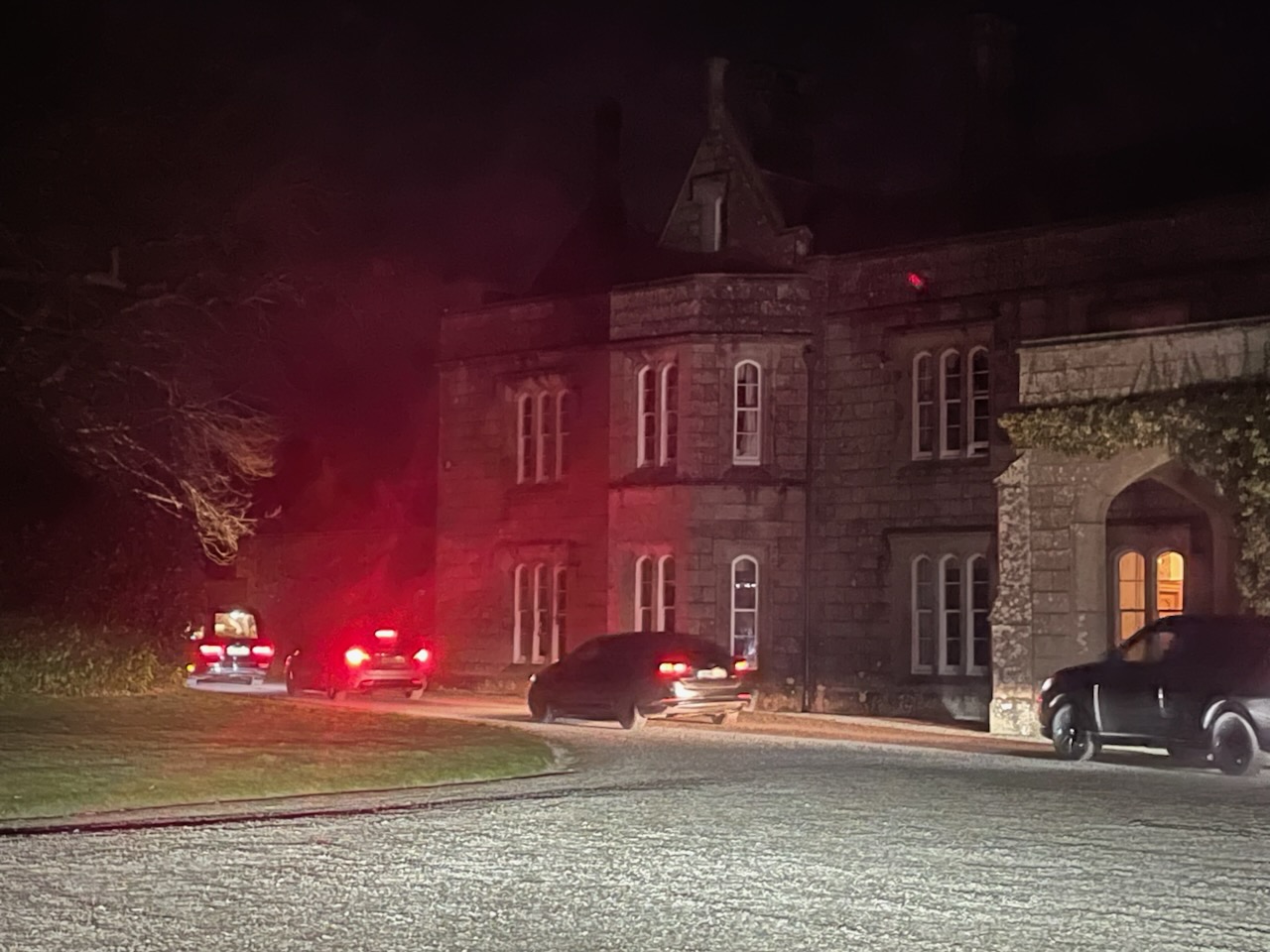
A funeral cortege of just five cars left from Kinsellagh’s Hill on the evening of Tuesday 4 March, Shrove Tuesday, and did a loop around Lisnavagh House in the fading light. The hearse paused briefly by the porte-cochère where Dad’s Renault 4s once used to park before advancing to St Mary’s where the coffin was carried into the church where Dad was baptised almost 87 years earlier. Outside the church, there was a silent honour guard of dozens of stewards from the Tullow Show wearing their officiating badges. My friend Mark Onions calved a twin bull that night and called him Ben in honour of my father, who had been a tremendous friend of his father long decades earlier.

Dad was buried in a white oak coffin, mounted and lined in white satin. He was clad in the old school style: a tweed suit made by Johnson’s of Tullow, with leather cuffs, a brown tie and brown shoes. The service was conducted by the Rev. Canon Máirt Hanly, assisted by Adrian Wilkinson, the Bishop of Cashel, Ferns and Ossory. Halligan’s Funeral Directors orchestrated proceedings with customary aplomb and humour. Andrew read A Time For Everything (Ecclesiastes 3, 1-15), Sasha read Bilbo’s Last Song by J.R.R. Tolkien, William gave the general thanks and invited everyone back to Lisnavagh, while the ten grandchildren delivered a perfect rendition of He is Gone by David Harkins. The hymns for the service were ‘Eternal Father, Strong to Save,’ ‘How Great Thou Art!,’ ‘The Lord’s My Shepherd’ and ‘Be Thou My Vision’. (We also had ‘Abide With Me’ at the service the night before.) Stephen Adams, the organist, performed a particularly fine and serendipitous rendition of Handel’s Passacaglia. Mum was the principal mourner, alongside Pally (Katherine) Doyle, while cousins included Anna Rose Bramwell, Johnny and Henry Dalgety, the Doyle family, Thomas and Susanna Crampton, and Thomas Butler. Rupert Butler was volunteered into the role of chief usher! The flower arrangement were by Sarah Page.
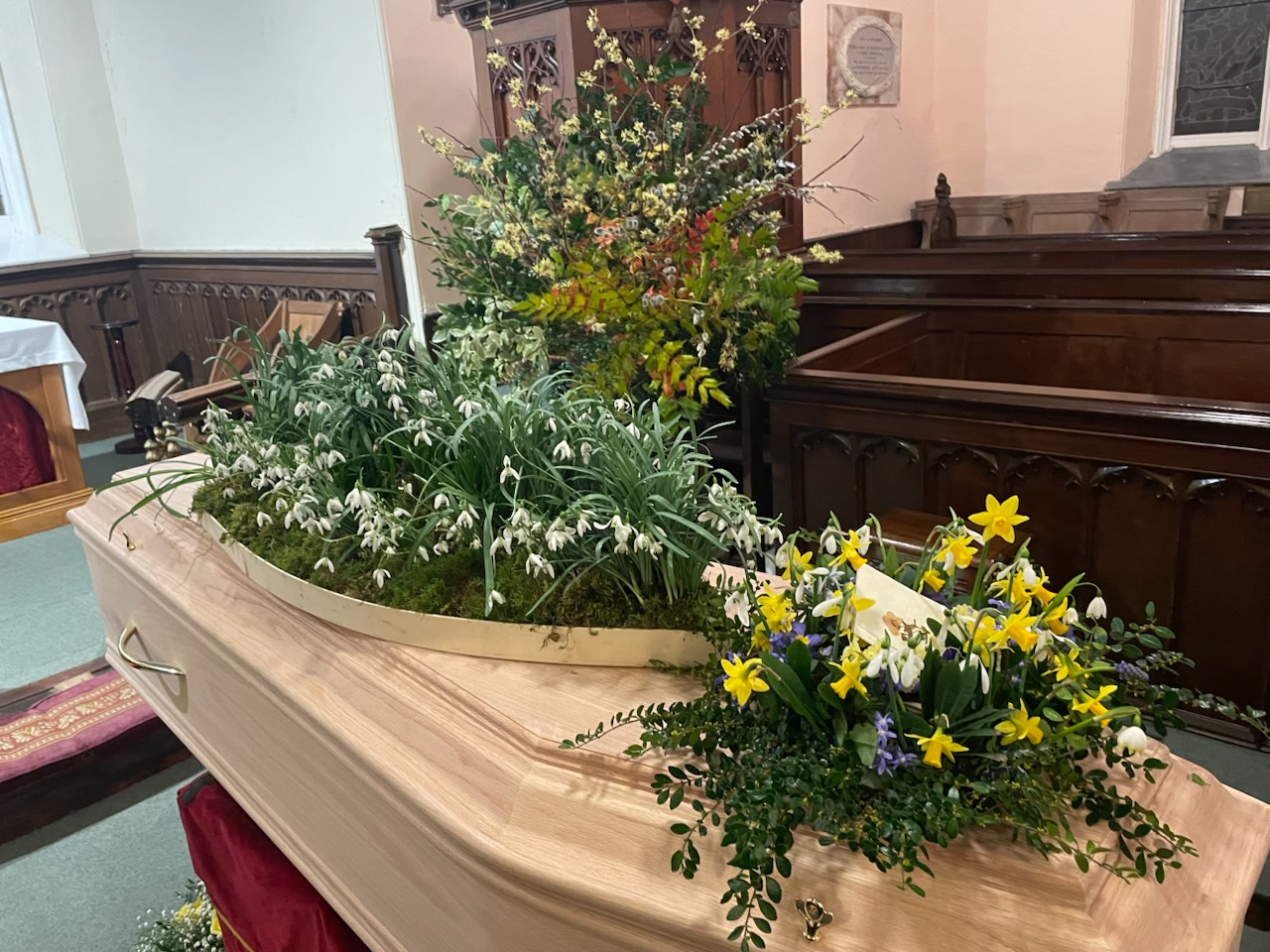
HMS Snowdrop by Sasha Sykes adorns the coffin. This large boat-shaped wooden platter was filled with snowdrops still planted in the soil of Lisnavagh. Photo: Tom Crampton.


William, Andrew, Tom Sykes and I were the pallbearers throughout. Michael and Timmy Doyle helped carry the coffin into the church. Shamus Bunbury and Ben Sykes helped bring it on down to the grave.
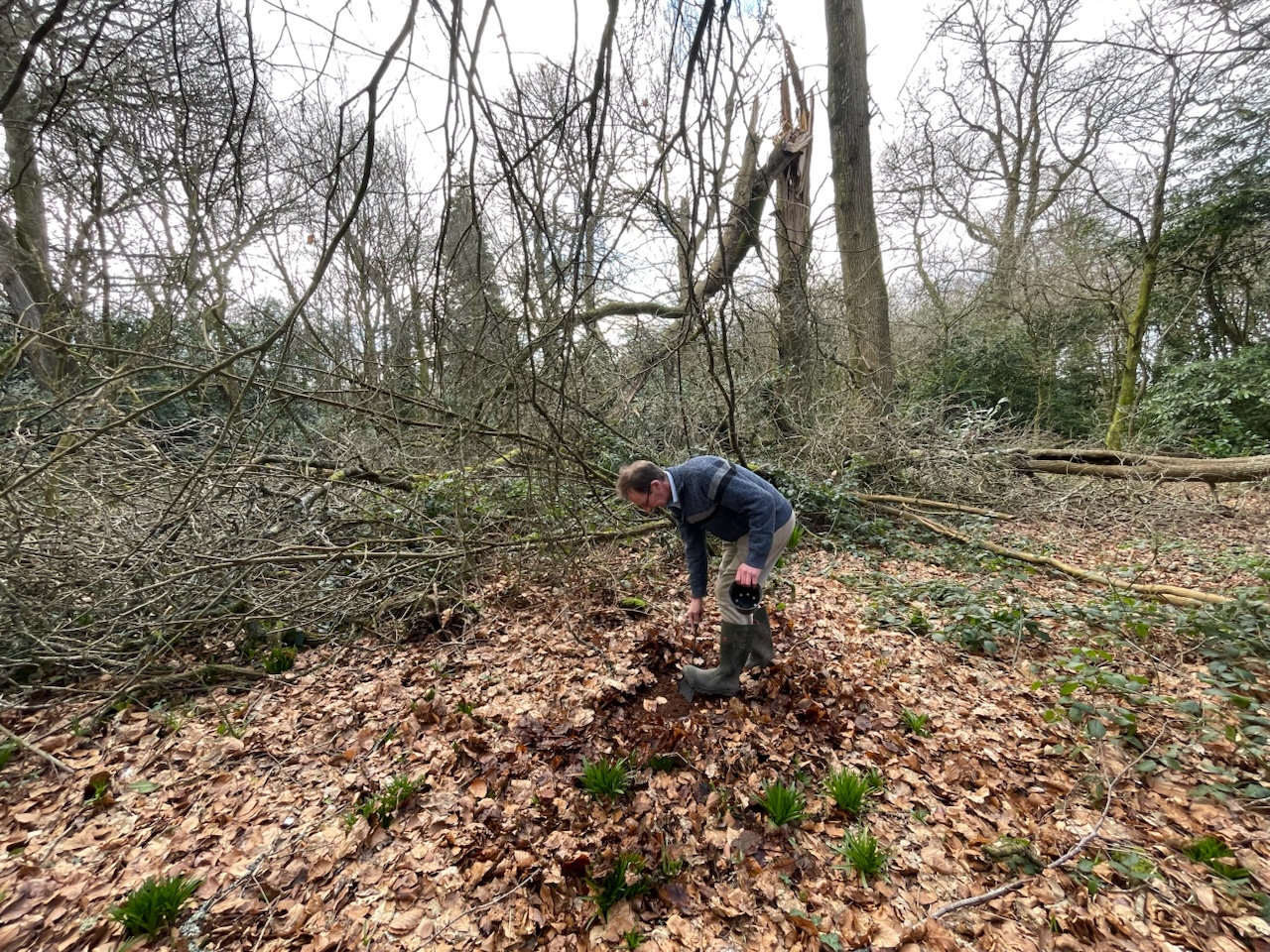
Canon Máirt Hanly added a mix of soil that William got from the Reservoir Wood at Lisnavagh (above), along with a bucket that Tom Crampton scooped up from the Pleasure Grounds and the woods by Kinsellagh’s Hill. Andrew (below) helped dig the latter, adding: ‘In retrospect some might have been compost.’ Photo: Tom Crampton.

Andrew gathering earth at Kinsellagh’s Hill. Photo: Tom Crampton.

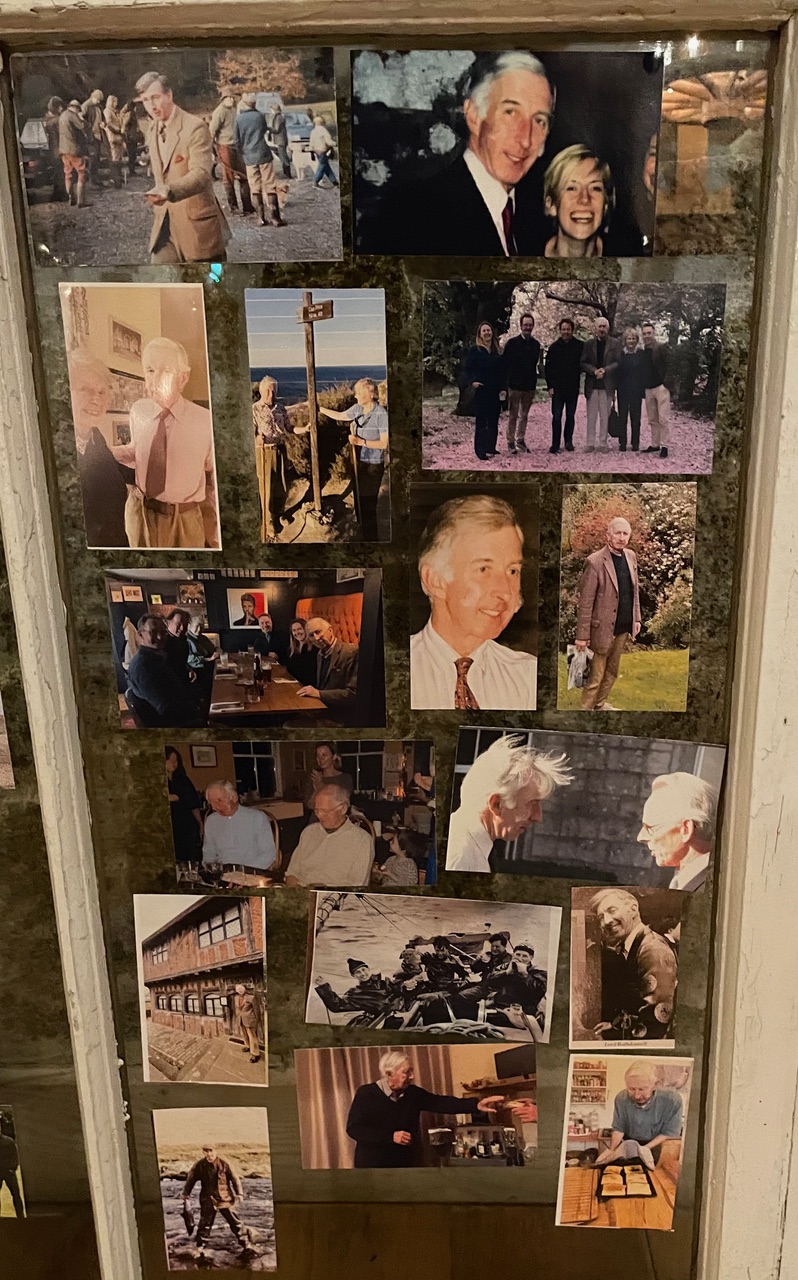
A Rosie Bunbury creation … In his thanks at the funeral, William said that—given Ben’s significant health scare more than a decade ago—that if his life were a book, someone had managed to slip an additional chapter in at the end. “And that chapter may just have been the best one.”
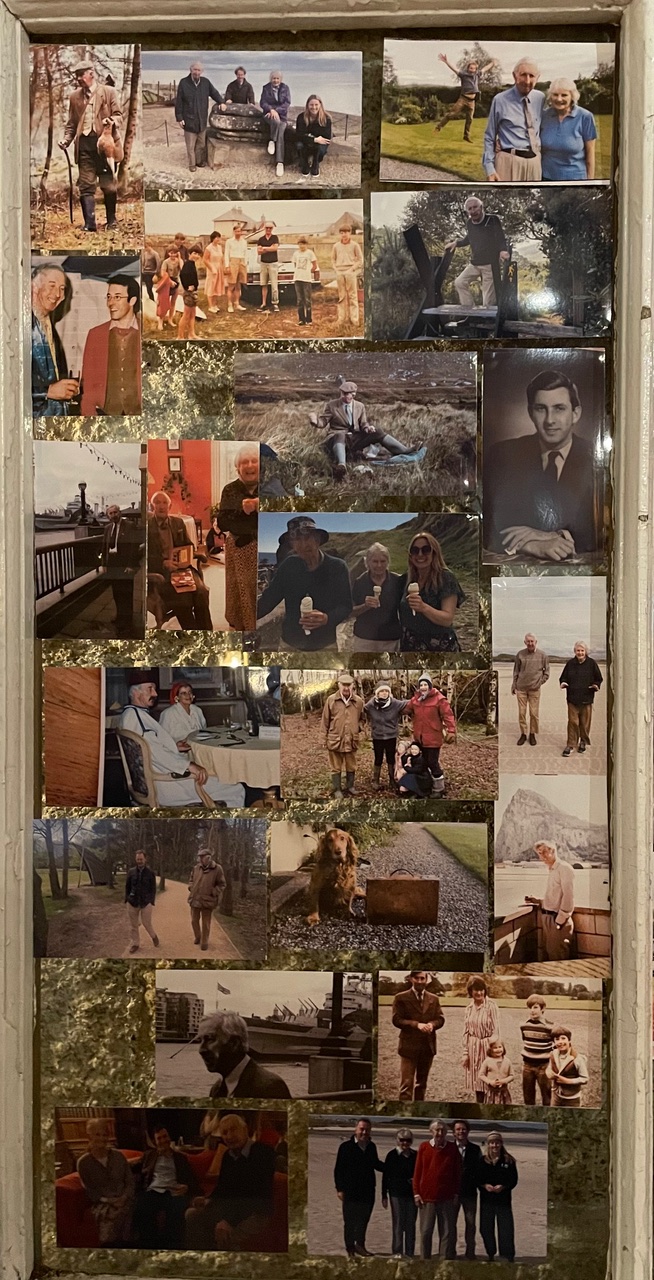
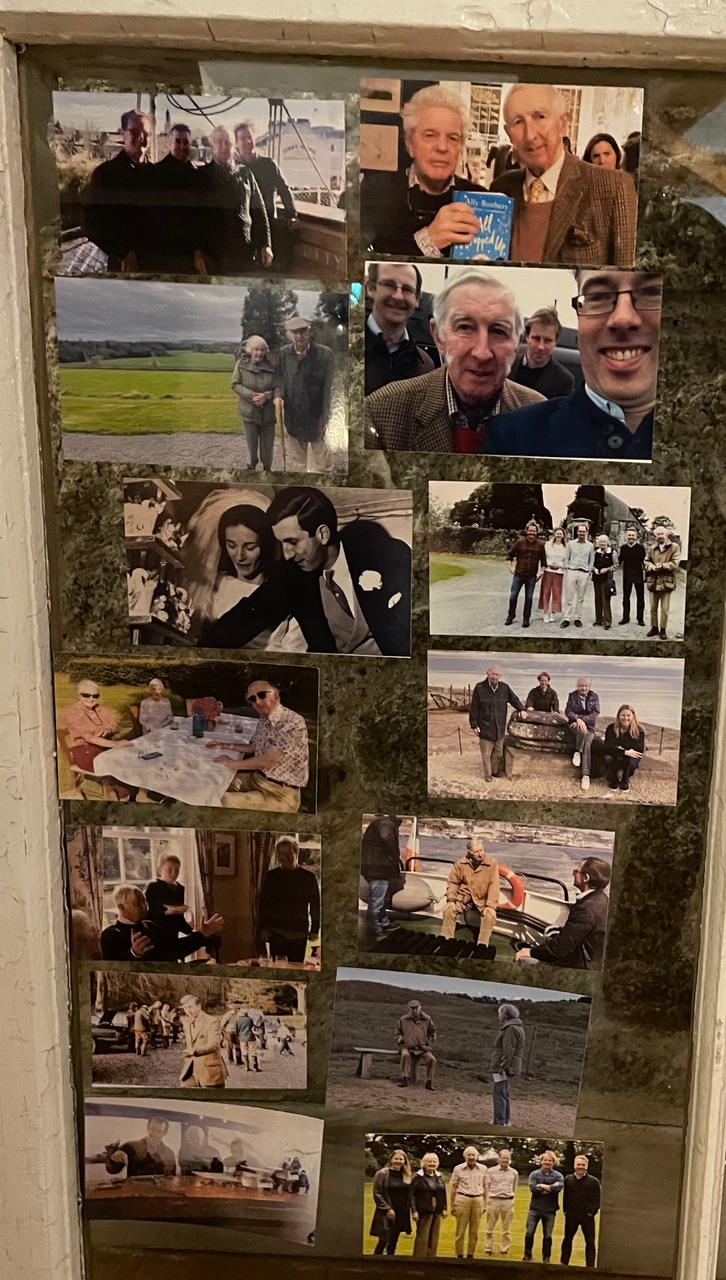
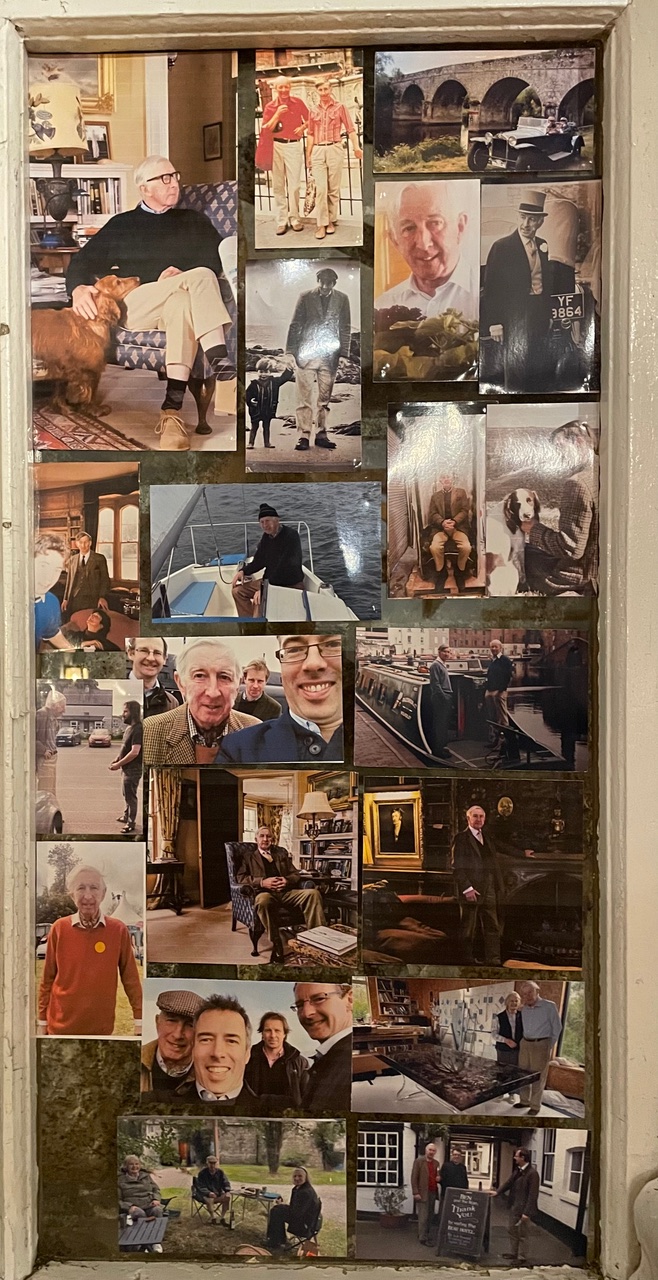

Our father, my brothers and I.